Medically reviewed by Dr. Sameh Nabil, DO, ophthalmologist · Last reviewed November 27, 2026
Post-cataract blurry vision is one of the most common reasons patients call the clinic after an otherwise successful operation. The cause depends on when the blur starts, so timing gives the examiner a practical first filter.
Why Timing Guides Post-Cataract Blurry Vision
Blur on the first day usually reflects corneal edema, inflammation or a dilated pupil. Blur that appears after a clear interval points to other causes. Cystoid macular edema typically peaks between four and twelve weeks, and posterior capsule opacification develops over months or years. Therefore, always ask when vision was last clear.
The First Days: Corneal Edema and Inflammation
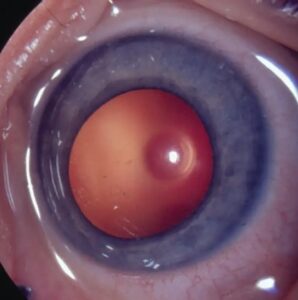
Stromal edema with Descemet folds follows endothelial stress from dense nuclei, long phaco time or preexisting Fuchs dystrophy. Most cases clear within days to weeks with topical steroids. Persistent edema beyond a few months suggests endothelial decompensation (see post-cataract corneal edema).
Anterior chamber cells and flare also blur the image. Retained viscoelastic can raise intraocular pressure enough to cause epithelial edema. As a result, measure pressure at every early visit, because a pressure spike responds quickly to treatment.
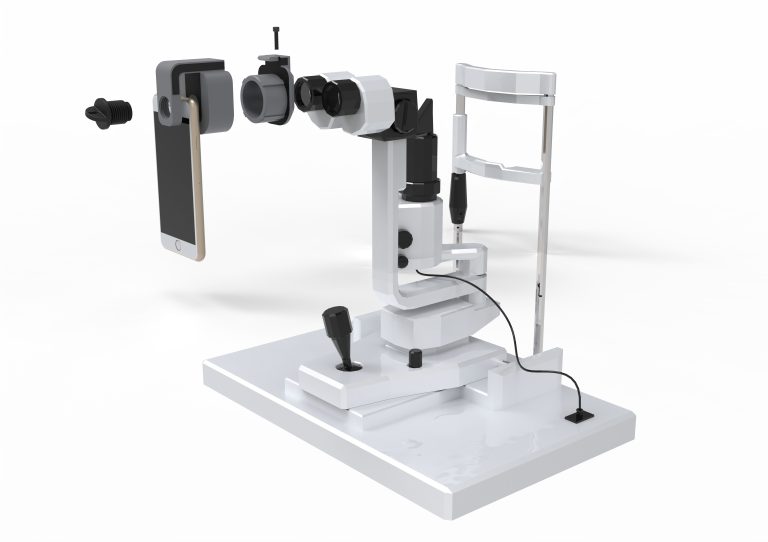
All-fit Slit-Lamp Adapter
Record and share exactly what you see at the slit lamp. One adapter fits any slit lamp or surgical microscope — and any smartphone.
From Choroida — the team behind this siteDanger Signs in Post-Cataract Blurry Vision
Increasing pain, worsening redness and falling vision in the first week demand same-day review, because acute endophthalmitis usually presents within that window. Hypopyon, vitritis and a poor red reflex support the diagnosis. The Endophthalmitis Vitrectomy Study guided the choice between tap and inject and immediate vitrectomy.
In addition, sudden shadows, flashes or a curtain at any stage suggest retinal detachment. This is more frequent after posterior capsule rupture. Therefore, perform a dilated fundus examination whenever the blur does not match the anterior segment findings.
Refractive Surprise and Residual Error
A quiet eye with clear media and vision that improves with a pinhole points to residual refractive error. Biometry errors, wrong lens power, previous refractive surgery and toric lens rotation are common reasons (see refractive surprise after cataract surgery). Early refraction may still shift as the wound heals.
Dry Eye After Cataract Surgery
Fluctuating blur that clears with blinking often comes from the ocular surface. Incisions cut corneal nerves, while preserved drops and povidone iodine add epithelial toxicity. Punctate staining and a short tear breakup time confirm it, and preexisting meibomian gland disease often worsens during the first postoperative weeks.
Weeks Two to Twelve: Cystoid Macular Edema
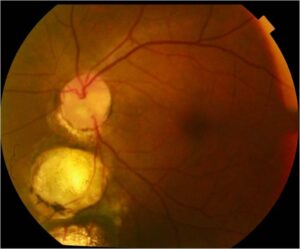
Pseudophakic cystoid macular edema causes gradual blur and sometimes metamorphopsia after an initially good result. OCT shows intraretinal cysts and central thickening. Fluorescein angiography shows a petaloid leakage pattern with optic disc staining (see Irvine-Gass syndrome).
Diabetes, uveitis, epiretinal membrane and posterior capsule rupture raise the risk. The PREMED study supported combined topical NSAID and steroid prophylaxis in nondiabetic eyes. Most cases resolve with topical therapy, although chronic edema may need periocular or intravitreal steroid.
Post-Cataract Blurry Vision Months Later
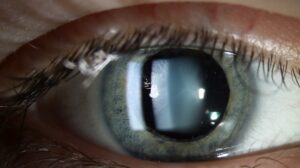
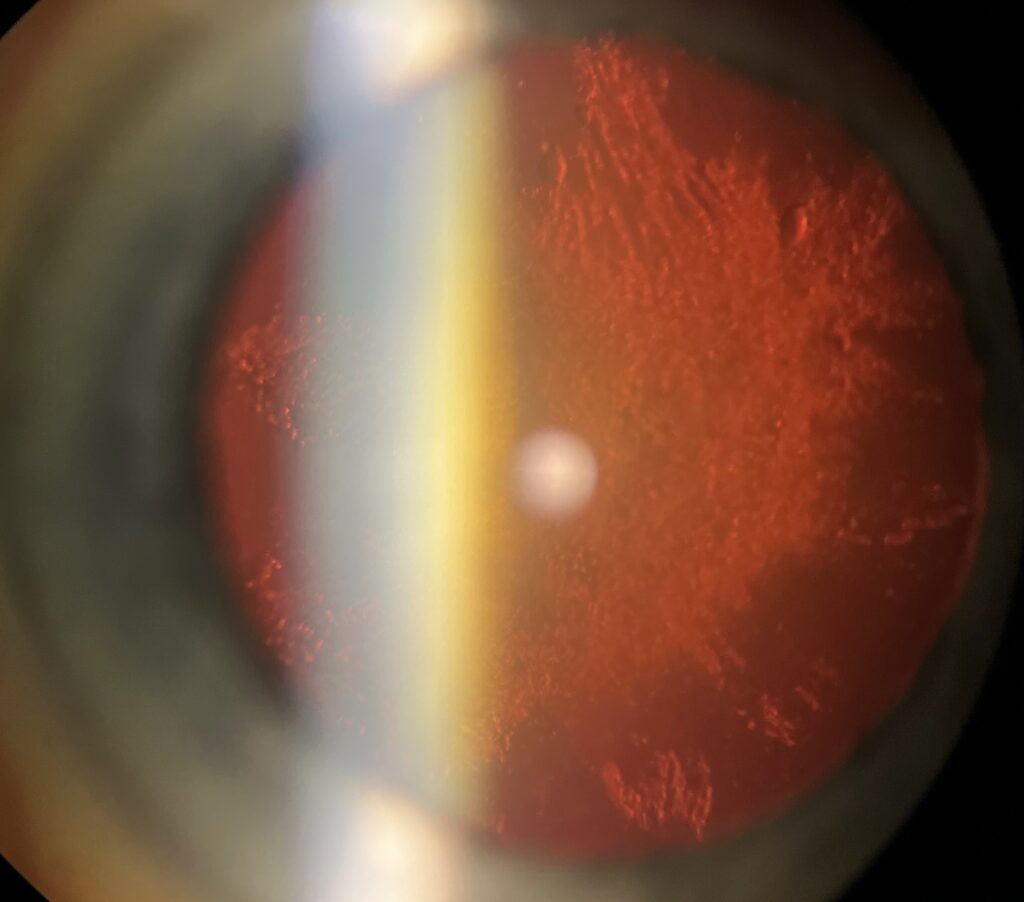
Gradual blur, glare and haze months or years after surgery usually reflect posterior capsule opacification. Retroillumination shows pearls or fibrosis behind the implant (see Elschnig pearls and posterior capsule opacification). Nd:YAG capsulotomy restores vision quickly, although it carries small risks of pressure rise, retinal detachment and implant pitting.
Examining the Patient With Post-Cataract Blurry Vision
Start with uncorrected and pinhole acuity, then check refraction, pressure and the wound, cornea, chamber and implant position at the slit lamp. Next, dilate the pupil to assess the capsule and retina. Obtain a macular OCT whenever acuity falls short of what the anterior segment explains.
Counseling on Post-Cataract Blurry Vision
Tell patients that mild haze in the first days is expected, while fluctuating blur from dryness may last several weeks. However, they should call the same day for increasing pain, worsening redness, sudden vision loss, a curtain or new floaters. Delayed treatment of infection or detachment worsens the outcome.
Pitfalls to Avoid
- Do not attribute late blur to dryness without a dilated exam and macular OCT
- Never skip pressure measurement in a cloudy cornea on day one
- Avoid prescribing new glasses before the refraction stabilizes
- Do not perform capsulotomy while cystoid macular edema is active
- Check the toric lens axis before blaming the cornea for astigmatism
Frequently Asked Questions
Should I get new glasses right after cataract surgery?
Post-cataract blurry vision should not be treated with new glasses before the refraction stabilizes. Early refraction may still shift as the wound heals. A quiet eye whose vision improves with a pinhole suggests residual refractive error, which is best addressed once the measurements settle.
Who is more likely to get macular swelling after cataract surgery?
Pseudophakic cystoid macular edema is more likely in eyes with diabetes, uveitis or an epiretinal membrane, and after posterior capsule rupture. It causes gradual blur and sometimes distorted vision after an initially good result. Most cases resolve with topical therapy, though chronic edema may need periocular or intravitreal steroid.
Why is eye pressure checked after cataract surgery?
Post-cataract blurry vision can come from raised pressure, because retained viscoelastic can lift intraocular pressure enough to cause epithelial edema. Pressure should be measured at every early visit. A pressure spike responds quickly to treatment, so catching it early helps clear the blur.
Document what you see
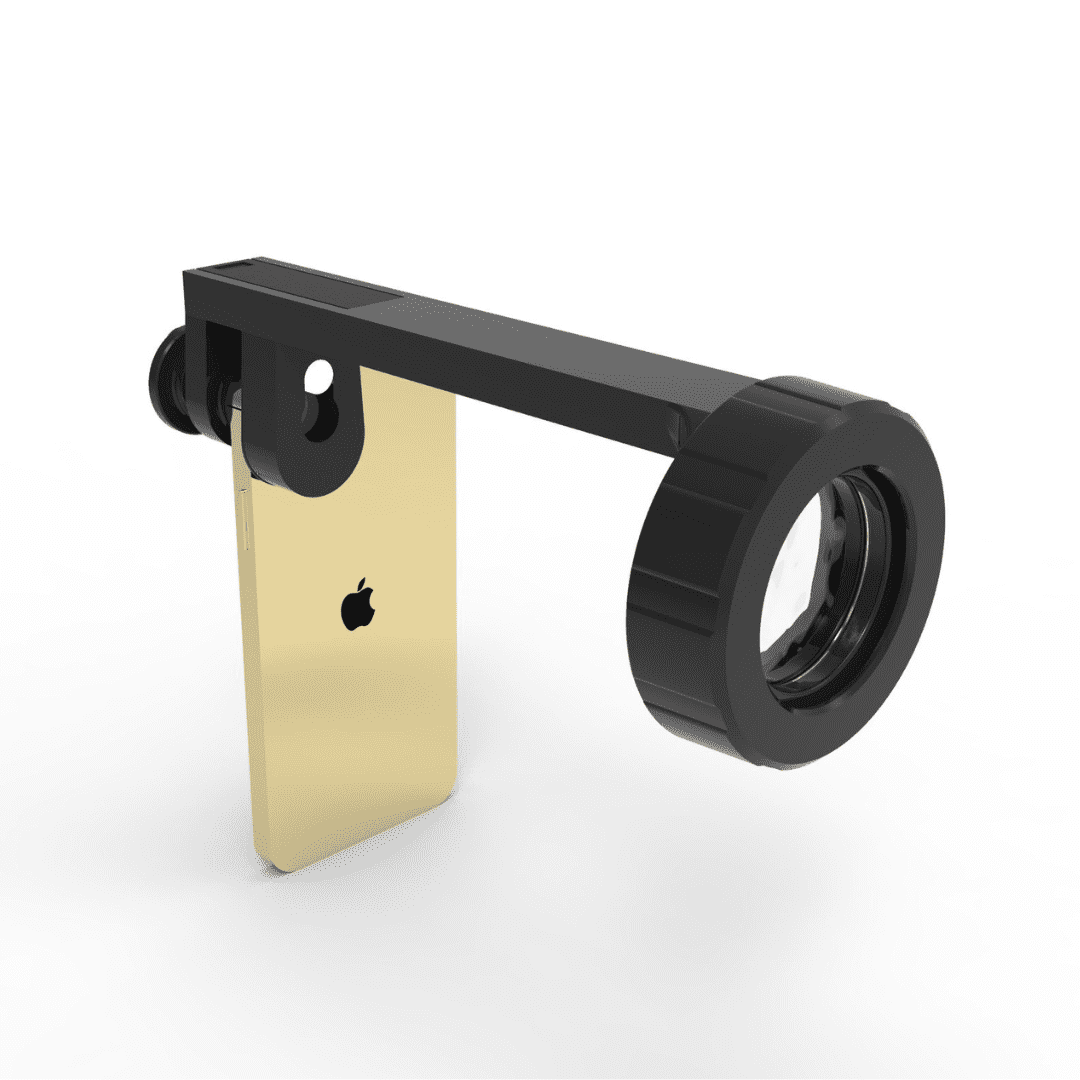
Two smartphone imaging tools built for everyday clinic use — one for the slit lamp, one for the fundus.
From Choroida — the team behind this siteReferences
- Miller KM, Oetting TA, Tweeten JP, et al. Cataract in the Adult Eye Preferred Practice Pattern. Ophthalmology. 2022;129:P1-P126.
- Endophthalmitis Vitrectomy Study Group. Results of the Endophthalmitis Vitrectomy Study: a randomized trial of immediate vitrectomy and of intravenous antibiotics for postoperative bacterial endophthalmitis. Arch Ophthalmol. 1995;113:1479-1496.
- Wielders LHP, Schouten JSAG, Winkens B, et al. European multicenter trial of the prevention of cystoid macular edema after cataract surgery in nondiabetics: ESCRS PREMED study report 1. J Cataract Refract Surg. 2018;44:429-439.
- Henderson BA, Kim JY, Ament CS, et al. Clinical pseudophakic cystoid macular edema: risk factors for development and duration after treatment. J Cataract Refract Surg. 2007;33:1550-1558.
- Starr CE, Gupta PK, Farid M, et al. An algorithm for the preoperative diagnosis and treatment of ocular surface disorders. J Cataract Refract Surg. 2019;45:669-684.
- Findl O, Buehl W, Bauer P, Sycha T. Interventions for preventing posterior capsule opacification. Cochrane Database Syst Rev. 2010;(2):CD003738.
Test yourself
A few questions straight from this article.
-
In post-cataract blurry vision, what does blur on the first postoperative day usually reflect?
The article states that blur on the first day usually reflects corneal edema, inflammation or a dilated pupil. Blur after a clear interval points to other causes. -
Pseudophakic cystoid macular edema after cataract surgery typically peaks during which postoperative window?
The article notes that cystoid macular edema typically peaks between four and twelve weeks, whereas posterior capsule opacification develops over months or years. -
Why should intraocular pressure be measured at every early visit after cataract surgery with blurry vision?
Retained viscoelastic can raise intraocular pressure enough to cause epithelial edema. A pressure spike responds quickly to treatment, so pressure is checked at every early visit. -
Which presentation in the first week after cataract surgery demands same-day review for suspected acute endophthalmitis?
Increasing pain, worsening redness and falling vision in the first week need same-day review because acute endophthalmitis usually presents in that window. Hypopyon, vitritis and a poor red reflex support the diagnosis. -
After cataract surgery, sudden shadows, flashes or a curtain suggest which condition, more frequent after posterior capsule rupture?
Sudden shadows, flashes or a curtain at any stage suggest retinal detachment, which is more frequent after posterior capsule rupture. A dilated fundus examination is needed when blur does not match anterior segment findings. -
A quiet eye with clear media after cataract surgery has vision that improves with a pinhole. What does this point to?
A quiet eye with clear media and vision that improves with a pinhole points to residual refractive error. Biometry errors, wrong lens power, prior refractive surgery and toric lens rotation are common reasons. -
Which findings confirm dry eye as the cause of fluctuating blur after cataract surgery?
Fluctuating blur that clears with blinking often comes from the ocular surface, and punctate staining with a short tear breakup time confirm it. Incisions cut corneal nerves and preserved drops add epithelial toxicity. -
Which fluorescein angiography pattern is described in pseudophakic cystoid macular edema?
The article states that fluorescein angiography shows a petaloid leakage pattern with optic disc staining in pseudophakic cystoid macular edema, while OCT shows intraretinal cysts and central thickening. -
What is the typical presentation of posterior capsule opacification after cataract surgery, and its treatment?
Gradual blur, glare and haze months or years after surgery usually reflect posterior capsule opacification. Nd:YAG capsulotomy restores vision quickly, with small risks of pressure rise, retinal detachment and implant pitting. -
After cataract surgery, which pitfall should be avoided regarding Nd:YAG capsulotomy?
The article lists as a pitfall not performing capsulotomy while cystoid macular edema is active. Macular OCT should be obtained whenever acuity falls short of what the anterior segment explains.

Writes and reviews the clinical articles on Educate. Every post is checked against peer-reviewed sources before it goes live.