Medically reviewed by Dr. Sameh Nabil, DO, ophthalmologist · Last reviewed November 27, 2026
Dry eye in children is less common than in adults, yet it is underdiagnosed because young patients rarely describe dryness and often present with rubbing, blinking or light sensitivity. The pediatric causes also differ from the adult spectrum (see dry eye disease), so the workup and treatment need their own approach.
Why Dry Eye in Children Is Missed
Children usually report itching, tired eyes or blurred reading vision, while parents notice frequent blinking, rubbing or squinting near screens. As a result, clinicians often label the symptoms as allergy, a habit tic or refractive error. In addition, adult questionnaires suit younger patients poorly, so a careful history from both child and parent carries more weight.
Common Causes of Dry Eye in Children
Meibomian gland dysfunction is probably the most frequent cause, and it often travels with chronic blepharitis or recurrent chalazia. Allergic conjunctivitis also contributes, because inflammation destabilizes the tear film while oral antihistamines can reduce tear secretion. Prolonged screen use adds a further load, since children blink less often and less completely during focused tasks.
Systemic and Ocular Associations
- Juvenile idiopathic arthritis and pediatric Sjögren disease
- Vitamin A deficiency in at-risk populations
- Stevens-Johnson syndrome and graft-versus-host disease
- Familial dysautonomia and congenital alacrima
- Incomplete lid closure, lid scarring or facial nerve palsy
- Isotretinoin therapy for acne in teenagers
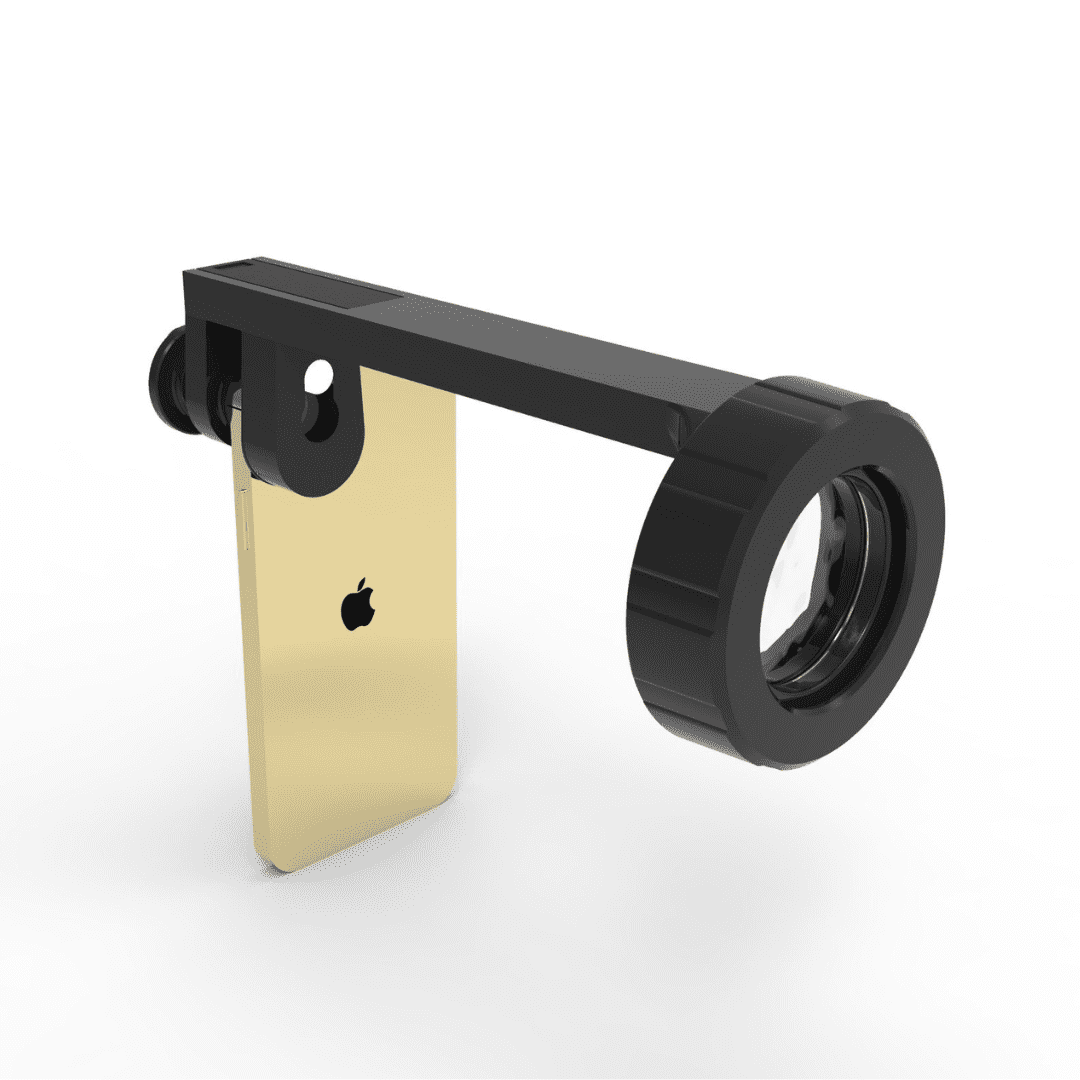
All-fit Slit-Lamp Adapter
Record and share exactly what you see at the slit lamp. One adapter fits any slit lamp or surgical microscope — and any smartphone.
From Choroida — the team behind this siteScreen Time and Pediatric Dry Eye
A Korean case-control study linked smartphone use with pediatric dry eye disease, and symptoms improved after children stopped using smartphones for a period. However, observational data cannot fully separate screen exposure from allergy, sleep and indoor lifestyle. Therefore, advise screen breaks as a practical measure while you still search for lid or systemic disease.
Meibomian Glands in Dry Eye in Children
Meibography studies have found gland atrophy in a meaningful share of children, which challenges the belief that gland dropout belongs only to older adults. At the slit lamp, look for capped orifices, margin telangiectasia and turbid expressed meibum. Children with recurrent styes or chalazia deserve this examination, because their lid disease often drives the surface symptoms.
Examining Dry Eye in Children
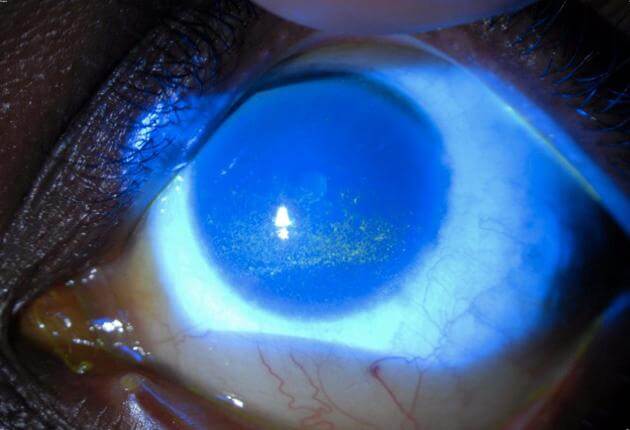
Start with the least invasive steps, because a frightened child rarely tolerates a full adult dry eye workup. Observe blink rate and completeness while the child talks, then inspect the lid margins, lashes and tear meniscus. Fluorescein staining and breakup time usually give the most useful information within a short visit.
Tests That Work in Young Patients
Schirmer testing is often poorly tolerated, and reflex tearing in an anxious child can produce misleadingly normal values. Older children may cooperate with noninvasive breakup time, tear osmolarity and infrared meibography, which are quick and contact-free. When results conflict, interpret them alongside the history and staining pattern, because no single test confirms the diagnosis.
Red Flags in Dry Eye in Children
Dense staining, filaments, corneal vascularization or reduced vision suggest disease beyond simple evaporative dryness. Likewise, a child with dry mouth, joint swelling, rashes or poor growth needs systemic evaluation with the pediatrician. Phlyctenules and marginal infiltrates point toward a scarring lid disease (see pediatric blepharokeratoconjunctivitis), which needs prompt treatment.
First-Line Treatment of Dry Eye in Children
Preservative-free artificial tears are the safest starting point, because frequent preserved drops can injure the corneal epithelium. Pair them with daily warm compresses and gentle lid hygiene, which address meibomian gland dysfunction directly. Environmental changes also help, including screen breaks, blinking reminders, humidified rooms and avoiding fans aimed at the face.
Treating Allergy and Lid Disease
When allergy drives symptoms, topical dual-action antihistamine and mast cell stabilizer drops are preferable to oral antihistamines, which may reduce tear secretion. For persistent meibomian disease, clinicians commonly use topical azithromycin or oral erythromycin, because tetracyclines can stain developing teeth. However, pediatric evidence for these regimens is limited and largely extrapolated from adult data.
Anti-Inflammatory Options and Their Limits
A short course of a low-potency topical steroid can calm severe surface inflammation, although children need close pressure monitoring because steroid response is common at this age. Topical cyclosporine is sometimes used off-label, yet pediatric trial data are sparse. Therefore, escalate only when basic measures fail (see dry eye treatment escalation).
Counseling Families About Dry Eye in Children
Explain that the condition is usually chronic but controllable, and that lid care must continue after symptoms settle. Parents should supervise compresses and drops, since young children often skip them. Finally, review the child within a few weeks, then recheck staining, acuity and pressure if steroids were given.
Pitfalls to Avoid
- Do not label constant rubbing as a habit before examining the lid margins
- Never prescribe tetracyclines to young children for meibomian disease
- Do not trust a single normal Schirmer result in an anxious child
- Avoid starting steroids without a plan to monitor intraocular pressure
Frequently Asked Questions
Can antihistamine pills cause dry eye in children?
Dry eye in children can worsen with oral antihistamines, which may reduce tear secretion. When allergy drives the symptoms, topical dual-action antihistamine and mast cell stabilizer drops are preferable to oral antihistamines.
Is dry eye in children a lifelong condition?
Dry eye in children is usually chronic but controllable. Lid care must continue after symptoms settle, and parents should supervise compresses and drops, since young children often skip them. A review within a few weeks helps confirm the child is responding.
Why is a Schirmer test unreliable for diagnosing dry eye in children?
Schirmer testing is unreliable in children because it is often poorly tolerated, and reflex tearing in an anxious child can produce misleadingly normal values. Older children may cooperate better with noninvasive breakup time, tear osmolarity and infrared meibography, which are quick and contact-free.
Document what you see
Two smartphone imaging tools built for everyday clinic use — one for the slit lamp, one for the fundus.
From Choroida — the team behind this siteReferences
- Alves M, Dias AC, Rocha EM. Dry eye in childhood: epidemiological and clinical aspects. Ocul Surf. 2008;6:44-51.
- Moon JH, Kim KW, Moon NJ. Smartphone use is a risk factor for pediatric dry eye disease according to region and age: a case control study. BMC Ophthalmol. 2016;16:188.
- Gupta PK, Stevens MN, Kashyap N, Priestley Y. Prevalence of meibomian gland atrophy in a pediatric population. Cornea. 2018;37:426-430.
- Stapleton F, Alves M, Bunya VY, et al. TFOS DEWS II epidemiology report. Ocul Surf. 2017;15:334-365.
- Wolffsohn JS, Arita R, Chalmers R, et al. TFOS DEWS II diagnostic methodology report. Ocul Surf. 2017;15:539-574.
Test yourself
A few questions straight from this article.
-
Why is dry eye in children often missed at presentation?
The article says pediatric dry eye is underdiagnosed because young patients rarely describe dryness and present with rubbing, blinking or light sensitivity. Clinicians often mislabel it as allergy, a habit tic or refractive error. -
What is probably the most frequent cause of dry eye in children?
The article states meibomian gland dysfunction is probably the most frequent cause, and it often occurs with chronic blepharitis or recurrent chalazia. -
Why can oral antihistamines worsen dry eye in children with allergic conjunctivitis?
The article notes allergic inflammation destabilizes the tear film while oral antihistamines can reduce tear secretion. For this reason topical dual-action drops are preferred. -
What does the article say about screen use and dry eye in children?
Prolonged screen use adds load because children blink less often and less completely. Observational data cannot separate screens from allergy, sleep and lifestyle, so lid and systemic disease should still be sought. -
What do meibography studies show about meibomian gland atrophy in children with dry eye?
Meibography has found gland atrophy in a meaningful share of children, challenging the belief that gland dropout belongs only to older adults. -
Why is Schirmer testing unreliable for dry eye in an anxious child?
The article says Schirmer testing is often poorly tolerated and reflex tearing in an anxious child can give misleadingly normal values. A single normal result should not be trusted. -
Which finding in a child with dry eye suggests disease beyond simple evaporative dryness?
Dense staining, filaments, corneal vascularization or reduced vision are red flags for disease beyond simple evaporative dryness. -
What is the safest first-line drop for dry eye in children?
Preservative-free artificial tears are the safest starting point because frequent preserved drops can injure the corneal epithelium. They are paired with warm compresses and lid hygiene. -
Why are tetracyclines avoided for meibomian disease in young children with dry eye?
The article states clinicians use topical azithromycin or oral erythromycin because tetracyclines can stain developing teeth. -
Why is intraocular pressure monitored when a child with dry eye receives topical steroids?
A short course of low-potency steroid can calm severe inflammation, but children need close pressure monitoring because steroid response is common at this age.

Writes and reviews the clinical articles on Educate. Every post is checked against peer-reviewed sources before it goes live.