CATT and IVAN are the two large trials that compared bevacizumab with ranibizumab in neovascular age-related macular degeneration.
Both showed that the cheaper drug gave similar visual results.
Therefore, they changed prescribing and reimbursement across the world.
Background to CATT and IVAN
Ranibizumab improved vision in the MARINA and ANCHOR trials, and it became the first standard of care.
Bevacizumab had been used off label because it was a fraction of the price.
Also, no head-to-head trial existed.
Both trials set out to settle the question (see anti-VEGF therapy).
Design of the CATT Trial
The Comparison of AMD Treatments Trials enrolled 1208 patients in the United States.
Participants received ranibizumab 0.5 mg or bevacizumab 1.25 mg, either monthly or as needed.
Also, the primary outcome was the mean change in visual acuity at one year.
Martin and colleagues reported the second year, with a rerandomization after the first.
Fundus Explorer Pro
Photograph the retinal findings described here with the phone already in your pocket — 22 D optics and built-in illumination in one handheld unit.
From Choroida — the team behind this siteResults of the CATT Trial
At one year, both drugs gave similar gains of about 6 to 8 letters.
Monthly bevacizumab was equivalent to monthly ranibizumab, and as-needed regimens were also similar.
Also, the proportion with serious systemic events was higher with bevacizumab.
However, the events were not those typically linked to VEGF blockade.
Design and Results of the IVAN Trial
The IVAN trial enrolled 610 patients in the United Kingdom.
It compared the two drugs and also compared continuous with discontinuous treatment.
Chakravarthy and colleagues reported that bevacizumab was noninferior to ranibizumab for vision.
Also, discontinuous treatment gave slightly lower gains than continuous treatment.
Safety in CATT and IVAN
- Systemic serious events were more frequent with bevacizumab in CATT, mostly hospitalizations unrelated to VEGF
- Arterial thrombotic events did not differ clearly in IVAN
- Bevacizumab and ranibizumab both raised questions about geographic atrophy
Therefore, the safety data remain debated, and meta-analyses give mixed results.
Lessons From CATT and IVAN
Choose the drug according to cost, access, and patient factors.
Also, a monthly or a treat-and-extend schedule supports vision better than rare dosing.
Because bevacizumab is repackaged, ensure proper compounding and sterile technique (see intravitreal injection therapy).
Impact of CATT and IVAN on Practice
Many health systems adopted bevacizumab as first line.
As a result, savings allowed more patients to receive injections.
Also, newer agents such as aflibercept were compared against this benchmark.
Monthly Versus As-Needed Dosing in CATT and IVAN
Monthly dosing gave slightly better vision than as-needed dosing in CATT.
Also, the difference was small, and the as-needed group needed fewer injections.
Therefore, many clinicians use flexible regimens to reduce the burden.
Because monitoring costs matter, treat-and-extend schedules offer a compromise.
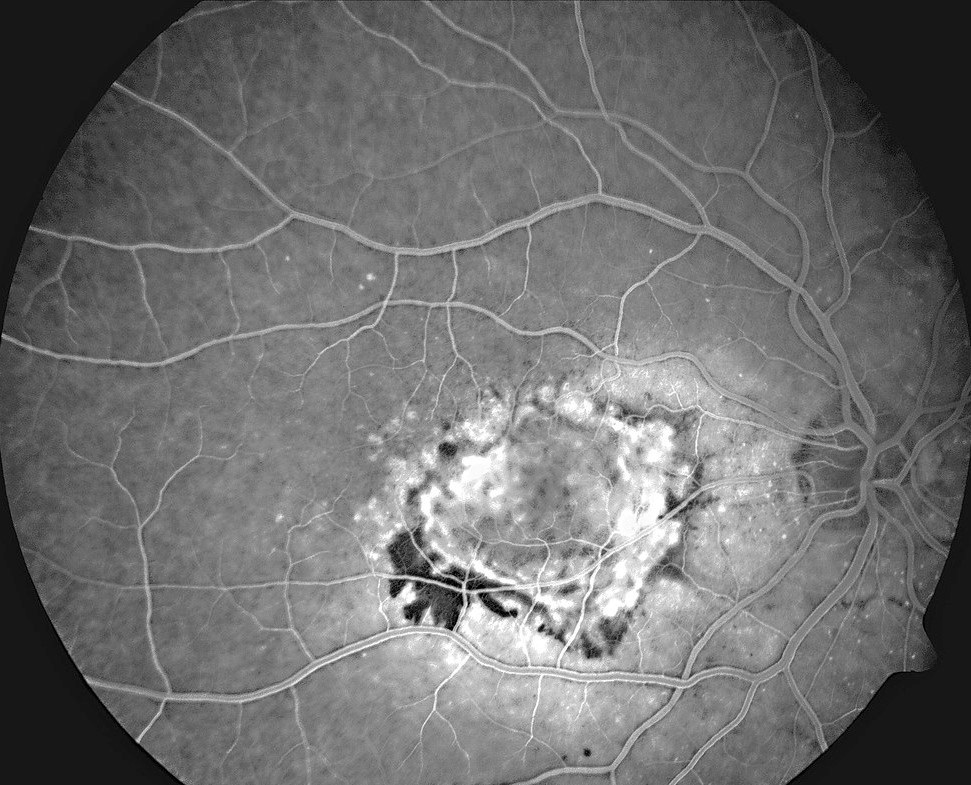
The Geographic Atrophy Question
Later analyses found more geographic atrophy with monthly dosing than with as-needed dosing.
Also, the mechanism and the clinical meaning are still debated.
Because atrophy can limit vision long term, discuss it with patients.
Therefore, the trials raised a new research question.
Cost and Access After CATT and IVAN
Bevacizumab costs a small fraction of the price of ranibizumab.
Also, the saving allows health systems to treat more patients.
Because access matters in low-income settings, bevacizumab has a global role.
However, availability of compounding varies between countries.
Quality of Repackaging
Bevacizumab comes in large vials that pharmacies divide into syringes.
Clusters of endophthalmitis have followed poor repackaging.
Therefore, use a reliable compounding source with sterile technique.
Also, record the batch number for each injection.
What the Trials Did Not Answer
They did not test newer agents, long-acting drugs, or other diseases.
Also, they did not address the very long term.
Therefore, later trials extended the comparison to diabetic edema and vein occlusion.
Key Points for the Clinician
Bevacizumab and ranibizumab gave similar vision in neovascular AMD.
Also, dosing frequency influences outcomes modestly.
Because both drugs work, cost and access guide the choice.
Interpreting the Visual Gains
A gain of seven letters is meaningful, because it equals more than one line on the chart.
Also, most patients kept driving vision after one year.
Because baseline acuity matters, those with better vision gain fewer letters but keep more function.
Therefore, set goals with each patient before treatment starts.
Follow-Up Studies of CATT and IVAN
Long-term follow-up of CATT patients showed that vision declined in many by five years.
Also, atrophy and fibrosis were frequent causes.
Because the disease is chronic, plan for lifelong care.
Summary of the Evidence
Two trials of different design reached the same conclusion on vision.
Also, safety debates continue, but no clear harm has emerged.
Therefore, clinicians can use either drug with confidence.
For the latest studies, see the PubMed results for CATT and IVAN.


Document what you see
Two smartphone imaging tools built for everyday clinic use — one for the slit lamp, one for the fundus.
From Choroida — the team behind this siteReferences
- CATT Research Group. Ranibizumab and bevacizumab for neovascular age-related macular degeneration. N Engl J Med. 2011;364:1897-1908.
- Martin DF, Maguire MG, Fine SL, et al. Ranibizumab and bevacizumab for treatment of neovascular age-related macular degeneration: two-year results. Ophthalmology. 2012;119:1388-1398.
- IVAN Study Investigators. Ranibizumab versus bevacizumab to treat neovascular age-related macular degeneration: one-year findings from the IVAN randomized trial. Ophthalmology. 2012;119:1399-1411.
- Chakravarthy U, Harding SP, Rogers CA, et al. Alternative treatments to inhibit VEGF in age-related choroidal neovascularisation: 2-year findings of the IVAN randomised controlled trial. Lancet. 2013;382:1258-1267.
Test yourself
A few questions straight from this article.
-
What was the primary outcome of the CATT trial of bevacizumab versus ranibizumab?
CATT's primary outcome was the mean change in visual acuity at one year; Martin and colleagues later reported the second year after rerandomization. -
Which intravitreal doses were compared in the CATT trial for neovascular AMD?
CATT participants received ranibizumab 0.5 mg or bevacizumab 1.25 mg, either monthly or as needed. -
What mean visual gain did both drugs achieve at one year in the CATT trial?
At one year both bevacizumab and ranibizumab gave similar gains of about 6 to 8 letters, more than one line on the chart. -
Besides the two drugs, what else did the IVAN trial compare in neovascular AMD?
IVAN, with 610 UK patients, compared the two drugs and continuous with discontinuous treatment; discontinuous treatment gave slightly lower gains. -
Which safety finding emerged with bevacizumab in the CATT trial?
Serious systemic events, mostly hospitalizations, were more frequent with bevacizumab in CATT, but they were not those typically linked to VEGF blockade. -
In later CATT analyses, which regimen was linked with more geographic atrophy in neovascular AMD?
Later analyses found more geographic atrophy with monthly than with as-needed dosing, though the mechanism and clinical meaning are still debated. -
In CATT, how did as-needed anti-VEGF dosing compare with monthly dosing?
Monthly dosing gave slightly better vision than as-needed dosing, but the difference was small and the as-needed group needed fewer injections. -
Which complication has occurred in clusters after poor repackaging of intravitreal bevacizumab?
Bevacizumab is divided from large vials into syringes, and clusters of endophthalmitis have followed poor repackaging, so use a reliable sterile compounding source and record the batch number. -
What caused vision to decline by five years in long-term follow-up of CATT patients?
Long-term follow-up showed vision declined in many patients by five years, with atrophy and fibrosis as frequent causes. -
Based on CATT and IVAN, what should guide the choice between bevacizumab and ranibizumab?
Because both drugs gave similar vision in neovascular AMD, the choice is guided by cost, access and patient factors.

Writes and reviews the clinical articles on Educate. Every post is checked against peer-reviewed sources before it goes live.