Viral conjunctivitis is the commonest cause of infectious red eye in adults.
Adenovirus causes most cases, and it spreads quickly in homes, schools and clinics.
Accurate diagnosis prevents needless antibiotics and limits outbreaks.
What Causes Viral Conjunctivitis
Adenovirus accounts for the majority of cases.
Other viruses such as enterovirus and herpes viruses play a smaller part.
The virus survives on surfaces for days.
Therefore, hands and instruments spread it easily.
Symptoms of Viral Conjunctivitis
Patients report watery discharge, redness and a gritty feeling.
One eye often starts first, and the second follows within days.
A recent cold or sore throat is common.
Also ask about contact with a similar case.
All-fit Slit-Lamp Adapter
Record and share exactly what you see at the slit lamp. One adapter fits any slit lamp or surgical microscope — and any smartphone.
From Choroida — the team behind this siteSigns on Examination
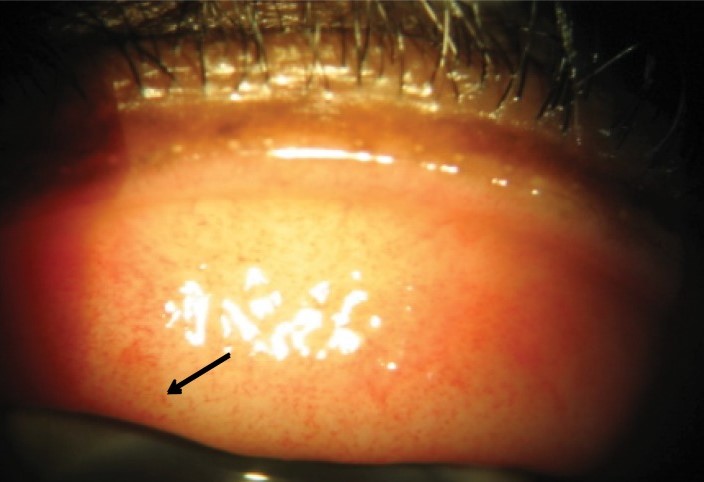
Look for follicles on the lower tarsal conjunctiva.
A tender preauricular lymph node is a useful sign.
Subconjunctival hemorrhage and pseudomembranes can occur.
Therefore, evert the lids in every red eye.
Distinguishing Viral From Bacterial Conjunctivitis
Bacterial disease gives thick purulent discharge and sticky lids.
Viral disease gives watery discharge and follicles.
However, the two overlap in practice.
So record the pattern and review if the course is atypical (see conjunctival follicles versus papillae).
Epidemic Keratoconjunctivitis
Some adenovirus types attack the cornea.
Subepithelial infiltrates appear after one to two weeks.
They can blur vision for months.
See epidemic keratoconjunctivitis.
Supportive Care
Cold compresses and artificial tears relieve symptoms.
Most cases settle within one to three weeks.
Antibiotics do not help a viral infection.
Therefore, explain the natural course clearly.
Antiviral Treatment
No antiviral drug is standard for adenoviral disease.
Povidone-iodine has shown some promise in studies but is not routine.
Also, topical steroids can mask the disease and prolong shedding.
As a result, reserve steroids for vision-threatening infiltrates.
Infection Control in Clinics
Wash hands and clean instruments after every red-eye patient.
Disinfect tonometer tips with an approved agent.
Also avoid shared drop bottles.
In this way, a clinic stops being a source of spread.
Infection Control at Home
Patients should avoid touching or rubbing their eyes.
They should use separate towels and wash hands often.
Pillowcases need frequent washing.
Also, contact lens wear should stop until the eye is clear.
Return to Work or School
Adults can usually return once the discharge and redness settle.
Policies differ between schools and workplaces.
Therefore, follow local guidance.
Counsel patients that the eye can remain contagious for about two weeks.
When to Refer
Refer severe pain, photophobia or reduced vision.
Also refer newborns and immunocompromised patients.
Persistent infiltrates need specialist follow-up.
Therefore, give clear return instructions.
Pitfalls to Avoid
- Do not prescribe antibiotics by reflex
- Never start steroids without a slit-lamp exam
- Avoid reusing tonometer tips without disinfection
- Do not forget to examine the cornea
Viral Conjunctivitis in Children
Children get viral conjunctivitis often and pass it on at school.
Watch for fever and sore throat, which suggest pharyngoconjunctival fever.
Most cases resolve without treatment.
Therefore, reassure parents and teach hygiene.
Viral Conjunctivitis Versus Allergy
Itching dominates in allergy, and both eyes are affected at once.
Viral conjunctivitis causes burning and a gritty feeling.
Lymph nodes are tender in viral disease.
So these features separate the two quickly.
Viral Conjunctivitis and Herpes Viruses
Herpes simplex can cause a follicular conjunctivitis with dendritic corneal lesions.
Zoster causes a painful rash along the ophthalmic nerve.
Both need antiviral therapy (see herpes simplex keratitis).
Therefore, stain the cornea in every unilateral red eye.
Viral Conjunctivitis in Newborns
Newborn conjunctivitis needs urgent care.
Chlamydia, gonococcus and herpes can all cause it.
Do not treat as a simple viral case.
Refer the baby the same day.
Monitoring Viral Conjunctivitis
Review severe cases after a week.
Check vision and look for subepithelial infiltrates.
If infiltrates affect vision, consider a short course of a mild steroid.
Taper slowly to avoid rebound.
Educating Patients About Viral Conjunctivitis
Give a handout on hygiene and expected course.
Explain that symptoms often peak in the first week.
Advise patients to avoid swimming pools.
Also remind them to discard eye make-up used during the illness.
Viral Conjunctivitis and Contact Tracing
Ask patients who else at home or work has red eyes.
Advise them to tell close contacts to wash hands.
Clinics can post simple hygiene reminders at reception.
In this way, an outbreak is easier to control.
Viral Conjunctivitis in the Emergency Department
Emergency doctors see many red eyes.
Train staff to check vision and stain the cornea.
Refer when the findings are not typical.
Therefore, good triage prevents missed disease.
Counseling Points
Because the infection is self-limited, reassurance is the main treatment.
However, patients should know the warning signs of corneal disease.
If vision drops, they should return at once.
Also, explain that follow-up is free of charge when worry persists.
Then document the advice you gave.


Document what you see
Two smartphone imaging tools built for everyday clinic use — one for the slit lamp, one for the fundus.
From Choroida — the team behind this siteReferences
- Jhanji V, Chan TC, Li EY, Agarwal K, Vajpayee RB. Adenoviral keratoconjunctivitis. Surv Ophthalmol. 2015;60:435-443.
- Azari AA, Barney NP. Conjunctivitis: a systematic review of diagnosis and treatment. JAMA. 2013;310:1721-1729.
- Pihos AM. Epidemic keratoconjunctivitis: a review of current concepts in management. J Optom. 2013;6:69-74.
- Varu DM, Rhee MK, Akpek EK, et al. Conjunctivitis preferred practice pattern. Ophthalmology. 2019;126:P1-P55.
Test yourself
A few questions straight from this article.
-
Which virus accounts for the majority of viral conjunctivitis cases?
Adenovirus causes most cases and spreads quickly in homes, schools and clinics; enterovirus and herpes viruses play a smaller part. -
Which lymph node finding is a useful sign of viral conjunctivitis?
Follicles on the lower tarsal conjunctiva and a tender preauricular node are useful signs; tender nodes also help separate viral disease from allergy. -
Which discharge pattern points to bacterial rather than viral conjunctivitis?
Bacterial disease gives thick purulent discharge and sticky lids, while viral disease gives watery discharge and follicles, though the two overlap in practice. -
In adenoviral epidemic keratoconjunctivitis, when do subepithelial corneal infiltrates typically appear?
Some adenovirus types attack the cornea, producing subepithelial infiltrates after one to two weeks that can blur vision for months. -
With supportive care alone, over what period do most cases of viral conjunctivitis settle?
Cold compresses and artificial tears relieve symptoms, and most cases settle within one to three weeks; antibiotics do not help. -
Why are topical steroids reserved for vision-threatening infiltrates in adenoviral conjunctivitis?
Steroids can mask the disease and prolong shedding, so they are kept for infiltrates that affect vision, given briefly and tapered slowly. -
Which clinic measure helps prevent spread of adenoviral conjunctivitis between patients?
The virus survives on surfaces for days, so hands and instruments are cleaned after every red eye, tonometer tips disinfected and shared drop bottles avoided. -
A child with viral conjunctivitis also has fever and a sore throat; which diagnosis does this suggest?
In children, fever and sore throat with viral conjunctivitis suggest pharyngoconjunctival fever; most cases resolve without treatment. -
In a follicular conjunctivitis, which corneal finding indicates herpes simplex and the need for antiviral therapy?
Herpes simplex can cause follicular conjunctivitis with dendritic corneal lesions and needs antiviral therapy, so the cornea is stained in every unilateral red eye. -
How should conjunctivitis in a newborn be managed?
Newborn conjunctivitis may be caused by chlamydia, gonococcus or herpes, so it is not treated as a simple viral case and the baby is referred the same day.

Writes and reviews the clinical articles on Educate. Every post is checked against peer-reviewed sources before it goes live.