
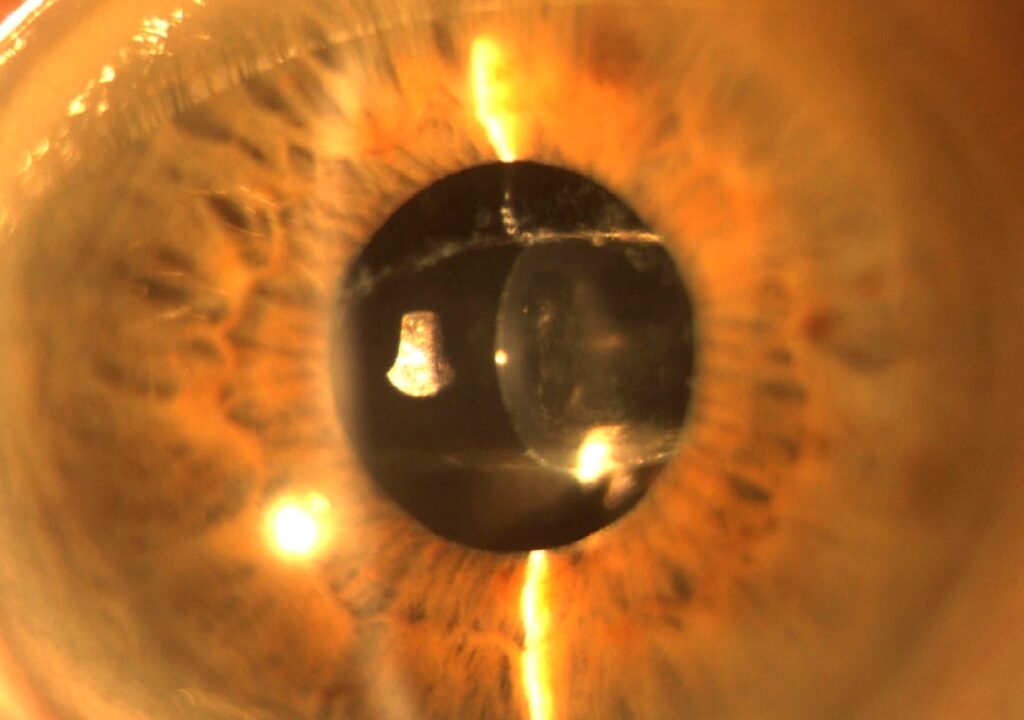
IOL selection is one of the most personal decisions in cataract surgery.
Each lens type trades distance, near vision and glare differently.
A good choice starts with the patient’s goals and eyes.
Why IOL Selection Matters
The lens stays in the eye for life.
It sets the baseline for vision and glasses use.
A mismatch with expectations causes dissatisfaction even when the surgery is perfect.
Therefore, discuss options before surgery.
Monofocal Lenses in IOL Selection
Monofocal lenses give sharp vision at one distance.
Most patients choose distance and wear reading glasses.
They have the lowest rate of glare and halos.
So they are the standard option.
All-fit Slit-Lamp Adapter
Record and share exactly what you see at the slit lamp. One adapter fits any slit lamp or surgical microscope — and any smartphone.
From Choroida — the team behind this siteEnhanced Monofocal Lenses
Enhanced monofocal lenses extend the intermediate range slightly.
They keep glare low (see enhanced monofocal IOL).
Reading glasses are still needed for fine print.
Also, they suit patients who want a modest range.
Toric Lenses in IOL Selection
Toric lenses correct corneal astigmatism.
Accurate measurements and alignment are essential (see toric IOL misalignment).
Patients with more than one diopter of astigmatism benefit.
Therefore, check topography before choosing.
Multifocal Lenses in IOL Selection
Multifocal lenses split light between distances.
They can reduce dependence on glasses.
However, halos and glare at night are common.
So counsel patients carefully.
EDOF Lenses in IOL Selection
EDOF lenses stretch focus across a range.
They give good distance and intermediate vision.
Near vision may need a little help.
Also, glare is usually less than with multifocal lenses.
Who Is a Poor Candidate for Premium Lenses
Eyes with macular disease, corneal irregularity or glaucoma do poorly.
Dry eye lowers accuracy and comfort.
Patients with high expectations or night driving needs may be unhappy.
Therefore, screen carefully.
Lifestyle Questions
Ask about driving at night, reading and computer use.
Ask about hobbies and occupation.
These details guide the choice.
So take time at the visit.
Monovision in IOL Selection
Monovision sets one eye for distance and one for near.
It reduces the need for glasses.
Not every patient tolerates it.
Therefore, try it with contact lenses first.
Surface Optimization
Treat dry eye and blepharitis before measuring.
A poor surface gives unreliable biometry.
This is key for premium lenses.
Also, repeat the measurements if values disagree.
Expectations and Consent
Explain that no lens is perfect.
Discuss glare, halos and the chance of glasses.
Document the discussion and the decision.
Because satisfaction depends on expectations, be honest.
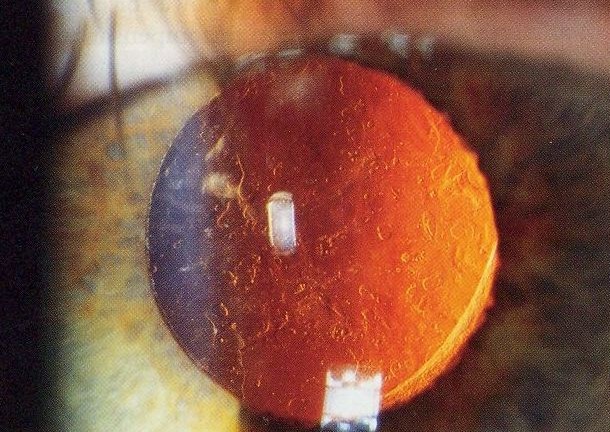
Cost
Premium lenses cost more, and insurance rarely covers the difference.
Be transparent about prices.
Do not pressure patients.
Therefore, let them decide calmly.
Evidence
Cochrane reviews show that multifocal lenses reduce spectacle use.
They are linked with more visual phenomena.
Satisfaction is similar between lens types when selected well.
So match the lens to the person.
IOL Selection: Practical Summary
Start with the patient’s goals and the health of the eye.
If the eye is healthy and the expectations are realistic, offer options.
Because glare matters, discuss it openly.
Finally, document your counseling.
Pitfalls to Avoid
- Do not promise independence from glasses
- Never ignore macular disease
- Avoid pressuring patients toward premium lenses
- Do not skip the dry eye assessment
IOL Selection and Previous Refractive Surgery
Previous LASIK or PRK makes lens calculation harder.
Use several formulas and corneal imaging.
If the result is uncertain, tell the patient before surgery.
Because accuracy matters, avoid premium multifocal lenses in these eyes.
IOL Selection in Glaucoma
Patients with glaucoma may lose contrast sensitivity.
Multifocal lenses further reduce contrast.
Because the optic nerve is fragile, prefer monofocal or EDOF lenses.
Therefore, discuss this limit openly.
IOL Selection in Dry Eye
Dry eye makes measurements less reliable.
Treat the surface before surgery.
If symptoms persist, avoid lenses that depend on perfect optics.
So choose conservatively.
IOL Selection and Night Driving
Night drivers may dislike halos from diffractive lenses.
Ask about the typical night routine.
Because glare is the most common complaint after multifocal lenses, set clear expectations.
Then decide together.
IOL Selection and Lens Exchange
Lens exchange is possible if the patient is unhappy.
It carries a risk and is not ideal.
Because it is better to choose well at first, take time.
Therefore, document the options discussed.
IOL Selection: Satisfaction Factors
Satisfaction depends on expectations, accuracy and the quality of the ocular surface.
Patients who understand trade-offs are happier.
Because small refractive errors matter, measure carefully.
So invest time before surgery.
For the latest studies, see the PubMed results for IOL selection.


Document what you see
Two smartphone imaging tools built for everyday clinic use — one for the slit lamp, one for the fundus.
From Choroida — the team behind this siteReferences
- de Silva SR, Evans JR, Kirthi V, Ziaei M, Leyland M. Multifocal versus monofocal intraocular lenses after cataract extraction. Cochrane Database Syst Rev. 2016;12:CD003169.
- Rampat R, Gatinel D. Multifocal and extended depth-of-focus intraocular lenses in 2020. Ophthalmology. 2021;128:e164-e185.
- Miller KM, Oetting TA, Tweeten JP, et al. Cataract in the adult eye preferred practice pattern. Ophthalmology. 2022;129:P1-P126.
- Kohnen T, Suryakumar R. Extended depth-of-focus technology in intraocular lenses. J Cataract Refract Surg. 2020;46:298-304.
Test yourself
A few questions straight from this article.
-
Which intraocular lens type has the lowest rate of glare and halos?
Monofocal lenses give sharp vision at one distance with the lowest rate of glare and halos, which is why they remain the standard option. -
How do multifocal intraocular lenses provide vision at more than one distance?
Multifocal lenses split light between distances, which can reduce glasses dependence but commonly brings halos and glare at night. -
Which vision ranges does an EDOF intraocular lens typically provide well?
EDOF lenses stretch focus across a range, giving good distance and intermediate vision; near may need a little help, and glare is usually less than with multifocals. -
Above what level of corneal astigmatism do patients benefit from a toric intraocular lens?
Patients with more than one diopter of astigmatism benefit from toric lenses, which need accurate measurements, topography and alignment. -
What does an enhanced monofocal intraocular lens offer over a standard monofocal lens?
Enhanced monofocal lenses extend the intermediate range slightly while keeping glare low, but reading glasses are still needed for fine print. -
Which eye is a poor candidate for a premium intraocular lens?
Eyes with macular disease, corneal irregularity or glaucoma do poorly with premium lenses, and dry eye lowers accuracy and comfort. -
Before choosing monovision with intraocular lenses, how should the patient's tolerance be tested?
Monovision sets one eye for distance and one for near, but not every patient tolerates it, so it is tried with contact lenses first. -
Which intraocular lens choice is avoided in eyes with previous LASIK or PRK?
Previous LASIK or PRK makes calculation harder, so several formulas and corneal imaging are used and premium multifocal lenses are avoided. -
What do Cochrane reviews show about multifocal compared with monofocal intraocular lenses?
Cochrane reviews show multifocal lenses reduce spectacle use but are linked with more visual phenomena; satisfaction is similar when lenses are well selected. -
Why should dry eye be treated before biometry for intraocular lens selection?
Dry eye and blepharitis are treated before measuring because a poor surface gives unreliable biometry, which is key for premium lenses.

Writes and reviews the clinical articles on Educate. Every post is checked against peer-reviewed sources before it goes live.


