Sudden vision loss is one of the most urgent presentations in eye care.
Some causes are treatable only within hours, so a structured approach prevents missed diagnoses.
First Questions
Ask whether one eye or both are affected, and next ask whether the loss is painful or painless. Finally, ask how long it has lasted, so three questions narrow the differential at once.
Monocular vs Binocular Loss
Loss in one eye points to the eye or optic nerve, while loss in both eyes in the same field points to the brain. Cover each eye to confirm, so test each eye separately.
Fundus Explorer Pro
Photograph the retinal findings described here with the phone already in your pocket — 22 D optics and built-in illumination in one handheld unit.
From Choroida — the team behind this sitePainless Sudden Vision Loss
Retinal artery occlusion, vein occlusion, detachment and vitreous hemorrhage are common causes, and ischemic optic neuropathy also presents this way. Wet AMD can cause sudden loss, so also consider stroke.
Painful Sudden Vision Loss
Optic neuritis causes pain on eye movement, while acute angle closure causes severe pain and halos. Corneal disease and uveitis also hurt, so pain narrows the list.
Central Retinal Artery Occlusion
Vision drops suddenly to counting fingers or worse, and the retina turns pale with a cherry-red spot (see central retinal artery occlusion). It is a stroke equivalent, so send the patient for urgent stroke evaluation.
Giant Cell Arteritis
Age over 50 and headache raise suspicion, and jaw pain, scalp tenderness and weight loss add to it. Check ESR and CRP and start steroids at once if suspected, and also arrange temporal artery biopsy.
Central Retinal Vein Occlusion
Hemorrhages cover the retina in a classic pattern, and vision loss is usually painless and variable (see central retinal vein occlusion). Systemic risk factors need review, so check blood pressure and glucose.
Retinal Detachment
Flashes, floaters and a curtain are typical, and a dilated exam confirms the diagnosis. Surgery is required, so refer the same day (see retinal detachment symptoms and triage).
Optic Neuritis
Young adults present with pain and blurred vision, and color vision is reduced. MRI helps with prognosis, so also consider multiple sclerosis.
Acute Angle Closure
The eye is red and the cornea hazy, and the pupil is mid-dilated. Pressure is very high, so start treatment immediately.
Transient Episodes
Brief monocular loss suggests carotid disease or arteritis (see amaurosis fugax), while brief bilateral blur may be migraine. Treat transient episodes as warnings, so arrange urgent work-up.
Examination Priorities
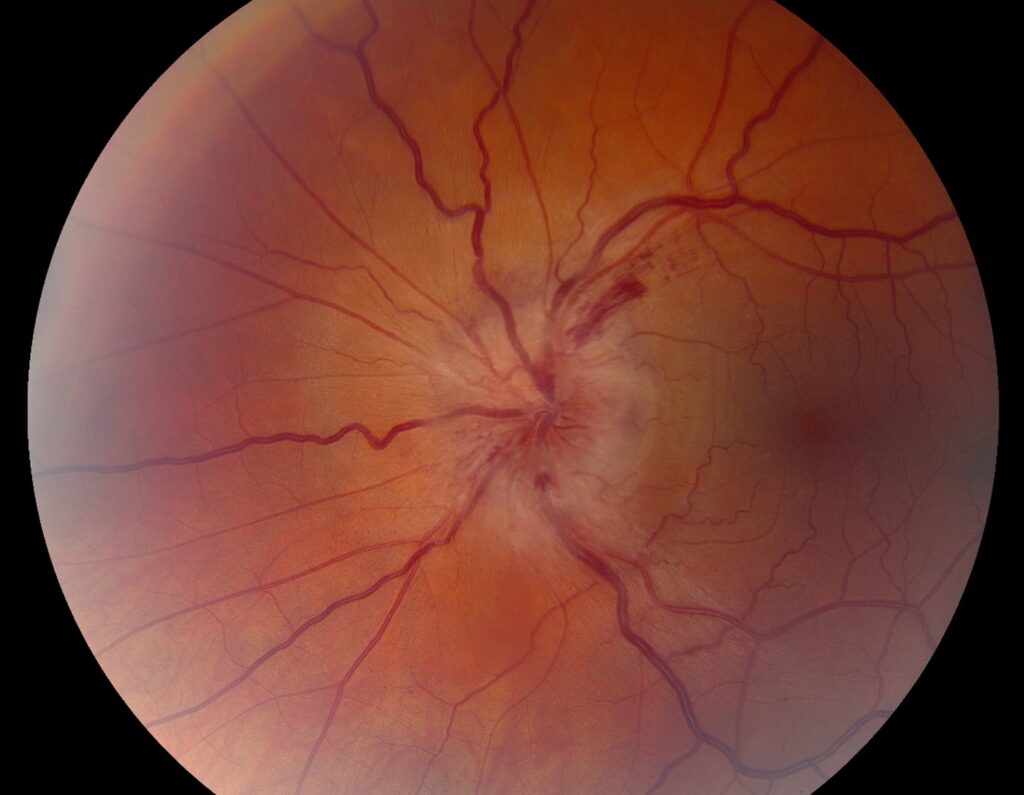
Check visual acuity, pupils, visual fields and fundus, and look for a relative afferent pupillary defect. Dilate unless angle closure is suspected, and also take blood pressure.
Investigations
OCT, fluorescein angiography and imaging of the brain may be needed, and blood tests screen for inflammation and clotting disorders. Choose tests by the leading diagnosis, and therefore avoid a blind battery of tests.
Sudden Vision Loss: Practical Summary
Triage with three questions, examine quickly and treat the dangerous causes first. If arteritis is possible, give steroids early, and because stroke may follow, arrange vascular work-up and document timing carefully.
Pitfalls to Avoid
- Do not delay steroids in suspected giant cell arteritis
- Never treat artery occlusion as a routine retinal problem
- Avoid dilating a possible angle closure
- Do not forget the brain
Sudden Vision Loss in Children
Children rarely report vision loss, and parents notice squinting or bumping into objects. Because causes include trauma, optic neuritis and tumors, examine promptly, so take every report seriously.
Sudden Vision Loss and Anticoagulation
Blood thinners increase the risk of vitreous hemorrhage, and sudden dark floaters and blurred vision are typical. Because the cause may be a tear, ultrasound may be needed, so do not stop the medication without advice.
Sudden Vision Loss After Surgery
Endophthalmitis, detachment and macular edema can follow surgery, and pain and redness suggest infection. Because endophthalmitis is an emergency, refer at once and then start treatment without delay.
Sudden Vision Loss and Stroke
Visual loss may be the first sign of stroke, and field defects that respect the midline suggest the brain. Because time matters, send the patient to the emergency department, and do not wait for outpatient imaging.
Sudden Vision Loss and Functional Causes
Some patients have no organic cause, with a normal examination and tests that do not match symptoms. Because organic disease must be excluded first, investigate fully, and then address the problem with sensitivity.
Sudden Vision Loss: Documentation
Record the time of onset, the best vision and the pupils, and document the exam and the fundus. Because later care depends on timing, be precise, and note any treatment given.


Document what you see
Two smartphone imaging tools built for everyday clinic use — one for the slit lamp, one for the fundus.
From Choroida — the team behind this siteReferences
- Mac Grory B, Schrag M, Biousse V, et al. Management of central retinal artery occlusion: a scientific statement from the American Heart Association. Stroke. 2021;52:e282-e294.
- Hayreh SS. Ocular vascular occlusive disorders: natural history of visual outcome. Prog Retin Eye Res. 2014;41:1-25.
- Hayreh SS, Zimmerman B. Visual deterioration in giant cell arteritis patients while on high doses of corticosteroid therapy. Ophthalmology. 2003;110:1204-1215.
- Pula JH, Yuen CA. Eyes and stroke: the visual aspects of cerebrovascular disease. Stroke Vasc Neurol. 2017;2:210-220.
Test yourself
A few questions straight from this article.
-
Which three opening questions narrow the differential of sudden vision loss at once?
Asking whether one or both eyes are affected, whether the loss is painful or painless, and how long it has lasted narrows the differential immediately. -
In sudden vision loss, where does loss in both eyes in the same visual field localize?
Loss in one eye points to the eye or optic nerve, whereas loss in both eyes in the same field points to the brain; covering each eye confirms which. -
Which cause of sudden vision loss typically produces pain on eye movement?
Optic neuritis causes pain on eye movement with reduced color vision in young adults, whereas vein occlusion, vitreous hemorrhage and ischemic optic neuropathy present painlessly. -
What fundus appearance is classic for central retinal artery occlusion?
In central retinal artery occlusion vision drops suddenly to counting fingers or worse and the retina turns pale with a cherry-red spot. -
Why must central retinal artery occlusion be referred for urgent stroke evaluation?
Central retinal artery occlusion is a stroke equivalent, so the patient is sent for urgent stroke evaluation rather than treated as a routine retinal problem. -
A patient over 50 with sudden vision loss, headache and jaw pain is suspected of giant cell arteritis. What is the first step?
When giant cell arteritis is suspected, ESR and CRP are checked and steroids started at once, with temporal artery biopsy arranged; steroids must not be delayed. -
Which symptom triad suggests retinal detachment as the cause of sudden vision loss?
Flashes, floaters and a curtain are typical of retinal detachment; a dilated exam confirms it, surgery is required and referral is the same day. -
What does brief transient monocular vision loss suggest?
Brief monocular loss suggests carotid disease or arteritis, while brief bilateral blur may be migraine; transient episodes are warnings needing urgent work-up. -
In examining sudden vision loss, when should pupil dilation be avoided?
Examination covers acuity, pupils, fields and fundus with a check for a relative afferent pupillary defect, and the pupil is dilated unless angle closure is suspected. -
A patient on anticoagulants has sudden dark floaters and blur. What is the correct advice about the medication?
Blood thinners increase the risk of vitreous hemorrhage, ultrasound may be needed to look for a tear, and the medication should not be stopped without advice.

Writes and reviews the clinical articles on Educate. Every post is checked against peer-reviewed sources before it goes live.