The VIEW trials tested aflibercept against monthly ranibizumab in neovascular age-related macular degeneration.
They showed that aflibercept every eight weeks gave the same vision outcomes with fewer injections, and therefore they changed how clinicians plan the treatment burden for patients.
Background to the VIEW Trials
MARINA and ANCHOR showed that monthly ranibizumab improved vision in neovascular AMD, but monthly injections place a heavy burden on patients and clinics.
Aflibercept binds VEGF with high affinity, so it may last longer (see anti-VEGF therapy), and the trial sponsors set out to test this idea.
Design of the VIEW Trials
VIEW 1 enrolled patients in the United States and Canada, while VIEW 2 enrolled patients in other regions, so together they included about 2400 patients.
Participants received aflibercept 0.5 mg monthly, 2 mg monthly, or 2 mg every eight weeks after three monthly doses, or ranibizumab 0.5 mg monthly, and the primary endpoint was noninferiority for maintaining vision at 52 weeks.
Fundus Explorer Pro
Photograph the retinal findings described here with the phone already in your pocket — 22 D optics and built-in illumination in one handheld unit.
From Choroida — the team behind this siteResults of the VIEW Trials
Heier and colleagues reported that about 95 percent of patients in every arm kept vision, and mean gains were close to 8 to 9 letters in each arm.
The every-eight-weeks arm needed about eight injections in the first year, compared with twelve or more for monthly dosing, and as a result the burden fell without a loss of vision.
Second-Year Findings in the VIEW Trials
Schmidt-Erfurth and colleagues reported 96-week results, in which patients entered a capped as-needed phase with visits every four weeks and a minimum injection interval of 12 weeks. Vision gains held, and the average number of injections was low (see intravitreal injection therapy).
Safety in the VIEW Trials
Ocular and systemic safety were similar between aflibercept and ranibizumab, and the rates of endophthalmitis and cardiovascular events did not differ clearly. Therefore, aflibercept was approved for use every eight weeks after loading.
Impact of the VIEW Trials on Practice
Many clinics adopted fixed eight-week dosing, and later treat-and-extend schedules, while the trials set a model for noninferiority designs in later drug studies. Because longer intervals reduce visits, they help patients who travel far for care.
Limits of the VIEW Trials
Both studies were sponsored and masked, they excluded some patients with prior treatment, and they did not compare with bevacizumab (see age-related macular degeneration).
Counselling Caregivers
Many patients depend on a relative to bring them to visits, so fewer injections mean fewer days lost from work. Because caregiver strain affects adherence, discuss the schedule with the family.
Practical Scheduling
Plan the next visit before the patient leaves the clinic, and then send a reminder one week ahead. Also keep a list of patients who miss visits, and call them promptly.
Take-Home Message
Aflibercept achieved the same vision with fewer injections, and the trials gave the field a model for noninferiority studies.
Because the schedule is lighter, adherence is easier for patients and clinics, so consider the interval when you plan treatment.
From Fixed Dosing to Treat and Extend
After VIEW, clinicians began to extend intervals according to disease activity, and treat-and-extend schedules maintain vision with a variable number of injections. Therefore, the trials supported both fixed and flexible plans. Because patients differ, choose the plan that fits the individual.
Higher-Dose Aflibercept
Later studies tested a higher dose that allowed intervals of 12 and 16 weeks, and the results showed noninferior vision in many patients. Therefore, injection burden can fall further in eligible patients.
Why Fewer Injections Matter
Each injection carries a small risk and requires a visit, and caregivers must take time off work to bring patients.
Because adherence falls with frequent visits, longer intervals help vision, and therefore the VIEW design had real benefit for practice.
Patient Counselling
Explain the loading phase and the later schedule in plain language, and describe symptoms that need urgent review, such as pain or reduced vision. Because treatment continues over many years, set expectations early.
Interpreting the Noninferiority Margin
The trials used a margin of 10 percent for the proportion that kept vision, but noninferiority does not mean that the drugs are identical. Therefore, read the secondary outcomes, such as the mean gain and anatomic results.
Key Points for the Clinician
Aflibercept every eight weeks matched monthly ranibizumab, and the safety profile was similar. Because the schedule is lighter, it suits many patients.
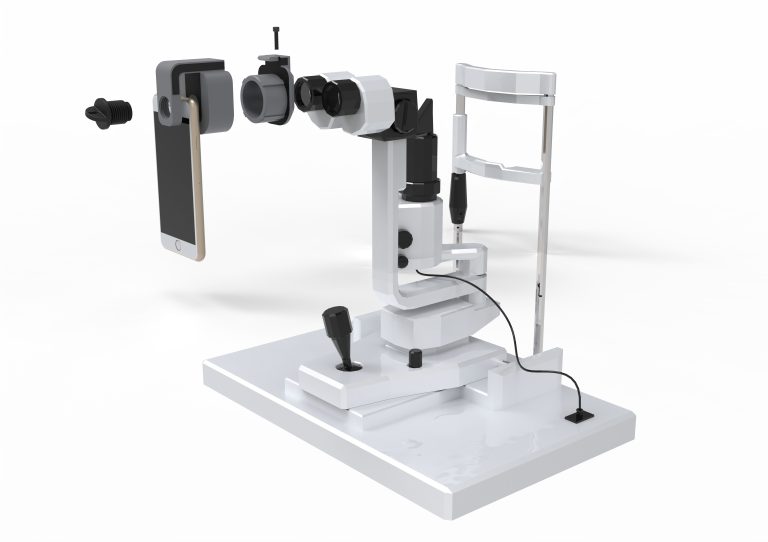

Document what you see
Two smartphone imaging tools built for everyday clinic use — one for the slit lamp, one for the fundus.
From Choroida — the team behind this siteReferences
- Heier JS, Brown DM, Chong V, et al. Intravitreal aflibercept (VEGF trap-eye) in wet age-related macular degeneration. Ophthalmology. 2012;119:2537-2548.
- Schmidt-Erfurth U, Kaiser PK, Korobelnik JF, et al. Intravitreal aflibercept injection for neovascular age-related macular degeneration: ninety-six-week results of the VIEW studies. Ophthalmology. 2014;121:193-201.
- Rosenfeld PJ, Brown DM, Heier JS, et al. Ranibizumab for neovascular age-related macular degeneration. N Engl J Med. 2006;355:1419-1431.
- Brown DM, Kaiser PK, Michels M, et al. Ranibizumab versus verteporfin for neovascular age-related macular degeneration. N Engl J Med. 2006;355:1432-1444.
Test yourself
A few questions straight from this article.
-
In the VIEW trials of neovascular AMD, which drug was compared against aflibercept as the monthly comparator?
The VIEW trials tested aflibercept against monthly ranibizumab 0.5 mg. The article notes they did not compare with bevacizumab. -
Why was aflibercept tested at longer intervals in the VIEW trials for neovascular AMD?
The article states aflibercept binds VEGF with high affinity, so it may last longer, and the sponsors set out to test this idea. -
Which problem with MARINA and ANCHOR dosing in neovascular AMD prompted the VIEW trials?
MARINA and ANCHOR showed monthly ranibizumab improved vision, but monthly injections were a heavy burden on patients and clinics. -
What was the aflibercept regimen in the extended-interval arm of the VIEW trials in neovascular AMD?
Participants received aflibercept 2 mg every eight weeks after three monthly doses, alongside monthly aflibercept arms and monthly ranibizumab. -
What was the primary endpoint of the VIEW trials of aflibercept in neovascular AMD at 52 weeks?
The primary endpoint was noninferiority for maintaining vision at 52 weeks. -
In the VIEW trials of neovascular AMD, about what proportion of patients in every arm maintained vision?
Heier and colleagues reported that about 95 percent of patients in every arm kept vision, with mean gains of about 8 to 9 letters. -
How many injections did the every-eight-weeks aflibercept arm need in the first year of the VIEW trials in neovascular AMD?
The every-eight-weeks arm needed about eight injections in year one, versus twelve or more for monthly dosing, without a loss of vision. -
What did the 96-week VIEW results show about the capped as-needed phase in neovascular AMD?
In the second year, patients had visits every four weeks with a minimum interval of 12 weeks. Vision gains held and the average injection number was low. -
How did safety compare between aflibercept and ranibizumab in the VIEW trials in neovascular AMD?
Ocular and systemic safety were similar, and endophthalmitis and cardiovascular event rates did not differ clearly, supporting approval every eight weeks after loading. -
What does noninferiority mean in the VIEW trials of aflibercept for neovascular AMD, according to the margin discussion?
The trials used a 10 percent margin for the proportion keeping vision, but noninferiority does not mean identical, so read secondary outcomes such as mean gain and anatomic results.

Writes and reviews the clinical articles on Educate. Every post is checked against peer-reviewed sources before it goes live.