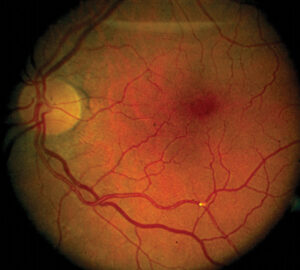
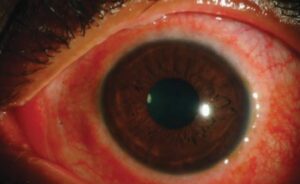
GLP-1 agonists and diabetic retinopathy became a topic of concern after a cardiovascular outcome trial found more retinopathy complications in patients on semaglutide.
These drugs are among the most effective for glucose control and weight loss.
They are widely used, so ophthalmologists will see many patients who take them.
The question is how much of the signal reflects the drug and how much reflects rapid glucose lowering.
GLP-1 Agonists and Diabetic Retinopathy: The SUSTAIN-6 Signal
SUSTAIN-6 randomized patients with type 2 diabetes and high cardiovascular risk to semaglutide or placebo, with cardiovascular events as the main outcome.
Semaglutide reduced major cardiovascular events, but retinopathy complications, defined as vitreous hemorrhage, blindness, or conditions needing injections or laser, were more frequent, with a hazard ratio of about 1.76 (see the references).
The retinopathy outcome was not a primary endpoint, and investigators did not systematically perform retinal examinations in all patients, so read the result with caution.
GLP-1 Agonists and Diabetic Retinopathy: Other Trials and Analyses
- Trials of liraglutide, such as LEADER, did not show a significant excess of retinopathy events
- Meta-analyses of GLP-1 agonist trials have not found a consistent increase in retinopathy overall
- Analyses suggest that the excess in SUSTAIN-6 was concentrated in patients with existing retinopathy and a rapid fall in HbA1c
- Real-world studies have shown mixed results, with some finding no excess and others a small increase in specific groups
Researchers have designed dedicated trials to study the effect of semaglutide on retinopathy progression.
Their results will clarify the question.
Fundus Explorer Pro
Photograph the retinal findings described here with the phone already in your pocket — 22 D optics and built-in illumination in one handheld unit.
From Choroida — the team behind this siteThe Likely Explanation
The leading hypothesis is that the effect reflects the rapid improvement in glycemic control, the same mechanism as early worsening seen with intensive insulin (see early worsening of diabetic retinopathy).
Patients with long-standing diabetes and baseline retinopathy are at risk.
The potent glucose-lowering effect of semaglutide may also trigger the response.
Whether the drug itself has a direct effect on the retina is uncertain, and experimental studies suggest possible direct actions that are not well understood.
GLP-1 Agonists and Diabetic Retinopathy: Who Should Be Monitored?
- Patients with existing moderate to severe nonproliferative or proliferative retinopathy (see diabetic retinopathy and proliferative diabetic retinopathy)
- Patients with a high HbA1c who start a drug that lowers it fast
- Those who have not had a recent eye examination
- Pregnant women and those planning pregnancy, in whom these drugs are not used, but who may transition
Patients with no retinopathy or mild disease are at lower risk, and routine screening is usually enough.
Practical Advice for Eye Clinics
- Ask diabetic patients about new glucose-lowering drugs at each visit, especially GLP-1 agonists and dual agonists
- Record the grade of retinopathy before and after the start of a potent drug
- Examine patients with significant retinopathy within three to six months of starting the drug
- Treat vision-threatening disease promptly, in the usual way (see anti-VEGF for nonproliferative diabetic retinopathy)
- Communicate with the diabetes team about the risk
GLP-1 Agonists and Diabetic Retinopathy: Advice for Physicians Prescribing the Drugs
- Refer patients with known retinopathy for an eye examination before the start of treatment
- Do not withhold effective therapy on the basis of the signal, since the cardiovascular and metabolic benefits are substantial
- Consider a gradual intensification of treatment in patients with severe retinopathy, in discussion with the ophthalmologist
- Make sure patients attend follow-up eye examinations
Other Eye Concerns Reported With These Drugs
Observational studies have reported an association between semaglutide and a rare optic nerve problem, and regulators and researchers are reviewing the data.
Also, patients who develop sudden vision loss should be examined promptly, and the drug history should be recorded.
This issue is separate from retinopathy, and the evidence is still evolving.
Counselling
Explain that these drugs are important for the health of the whole body, and that the eyes should be checked regularly, especially if retinopathy is present.
Reassure patients that most do well, and encourage them to report any change in vision.
Practical Example
A patient with severe nonproliferative retinopathy and an HbA1c of 11 percent starts weekly semaglutide, and within three months the HbA1c falls to 8 percent.
The ophthalmologist who has been following this patient examines the retina at three months, finds new cotton wool spots and early neovascularization, and treats promptly with laser or injections.
Because the visit was planned in advance, the complication is found early, and the patient continues the medication, which also protects the heart and kidneys.


Document what you see
Two smartphone imaging tools built for everyday clinic use — one for the slit lamp, one for the fundus.
From Choroida — the team behind this siteReferences
- Marso SP, Bain SC, Consoli A, et al. Semaglutide and cardiovascular outcomes in patients with type 2 diabetes. N Engl J Med. 2016;375:1834-1844.
- Marso SP, Daniels GH, Brown-Frandsen K, et al. Liraglutide and cardiovascular outcomes in type 2 diabetes. N Engl J Med. 2016;375:311-322.
- Bain SC, Klufas MA, Ho A, Matthews DR. Worsening of diabetic retinopathy with rapid improvement in systemic glucose control: a review. Diabetes Obes Metab. 2019;21:454-466.
- American Academy of Ophthalmology. Basic and Clinical Science Course, Section 12: Retina and Vitreous. AAO; current edition.

Writes and reviews the clinical articles on Educate. Every post is checked against peer-reviewed sources before it goes live.