Fully accommodative esotropia is an inward eye turn caused by the extra focusing effort of an uncorrected hyperopic child, and glasses alone straighten the eyes completely. Most children with it never need surgery. Getting the cycloplegic refraction right and keeping the glasses on full time is the treatment.
What Is Fully Accommodative Esotropia?
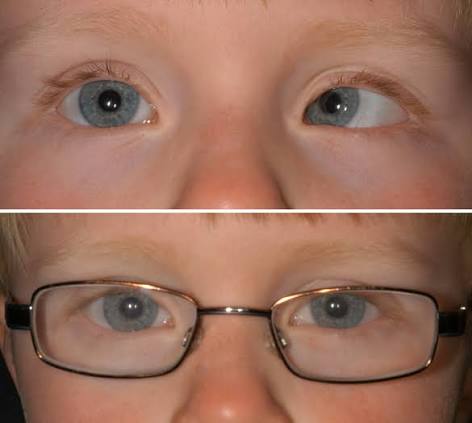
Fully accommodative esotropia means the eyes stay straight at distance and near whenever the child wears the full hyperopic correction. Without glasses, one eye turns inward, often when the child looks at a close object or is tired. No residual angle remains once the glasses are on.
Accommodative esotropia is the broader term and includes three patterns: refractive, nonrefractive (high AC/A), and partially accommodative. Each responds to glasses, but only the first is fully controlled by distance lenses alone. Sorting the child into the right group guides every later decision.
How Accommodative Esotropia Develops
Accommodation and convergence are neurologically linked. A hyperopic eye must accommodate to see clearly, and that effort drives a proportional convergence response. In a susceptible child, this accommodative convergence exceeds what binocular fusion can tolerate, and an esodeviation appears.
The child over-converges as a side effect of trying to see clearly. Correcting the hyperopia removes the accommodative demand that drives the turn. Onset usually falls between ages 2 and 3 years, with typical hyperopia of about +2.00 to +6.00 diopters.
What Accommodative Esotropia Looks Like in Toddlers and Children
In toddlers the turn is often intermittent at first. Parents notice one eye drifting inward when the child studies a toy, looks at a book, or is sick or tired. Over time the deviation can become constant, and the child may close one eye or tilt the head. Young children rarely report double vision because they suppress the image of the turned eye.
Photographs help the diagnosis. In a flash picture of an esotropic eye, the corneal light reflex sits toward the temporal side of the pupil center, while the fixing eye shows a centered reflex. Bring a few clear snapshots to the visit, because the turn can vanish in the exam room.
Types: Refractive and High AC/A Esotropia
Refractive Accommodative Esotropia
In the refractive type, the deviation is similar at distance and near, and full-time glasses straighten the eyes at both. Cycloplegic refraction sets the prescription. The esodeviation returns whenever the glasses come off, and this is the pattern that fits fully accommodative esotropia.
Non-Refractive (High AC/A) Accommodative Esotropia
In high AC/A esotropia, the near deviation exceeds the distance deviation because each unit of accommodation produces an abnormally large convergence response. Distance glasses leave the near esotropia uncorrected, so bifocals are often added. The hyperopia itself may be small or only moderate.
How Doctors Diagnose Accommodative Esotropia
Diagnosis rests on a careful orthoptic exam, a dilated fundus exam, and a cycloplegic refraction. The workup has four essential parts, and each one changes the prescription or follow-up plan we choose.
- Cycloplegic refraction, since accommodative esotropia can be masked or underestimated without full cycloplegia, which relaxes the child’s own accommodative effort during testing
- Measurement of the deviation with and without the full hyperopic correction, at both distance and near
- Calculation or clinical assessment of the AC/A ratio when the near deviation exceeds the distance deviation
- Assessment for amblyopia, which is common when the esotropia has been present for some time before diagnosis
The differential includes infantile esotropia, sixth nerve palsy, Duane retraction syndrome, sensory esotropia from an organic eye lesion, and nystagmus blockage syndrome. Incomitance, limited abduction, or a neurologic sign should prompt further workup rather than glasses alone.
Esotropia Glasses: How Full Correction Works
Treatment starts with the full cycloplegic hyperopic correction, worn full time. The effect can take several weeks to appear as the child learns to rely on the lenses rather than accommodative effort. Many children show excellent, sometimes complete, resolution of the esodeviation with glasses alone.
We generally prescribe the full cycloplegic hyperopia, trimmed only slightly when needed for comfort, because under-correction leaves residual accommodative demand. After several weeks, we recheck the alignment with the glasses on, at distance and near, to confirm the eyes are straight.
Families sometimes ask about stopping glasses to avoid dependence. The deviation typically returns without correction, so the glasses stay on even after the eyes look straight. Stopping them early undoes the benefit and risks amblyopia.
Accommodative Esotropia Treatment Beyond Glasses
Bifocals for High AC/A Esotropia
When near esotropia persists despite full distance correction, bifocals can reduce accommodative demand during near work. The add is chosen to neutralize the near esodeviation as closely as possible. The single-vision portion continues to control the distance alignment.
Amblyopia Treatment
Amblyopia is treated with patching or optical penalization alongside the refractive correction, following standard principles (see amblyopia patching therapy). Restoring equal vision in both eyes also supports stable binocular fusion once the eyes are aligned.
Surgery
Surgery is reserved for the nonaccommodative residual deviation that remains despite optimal glasses correction. It is never used to treat the accommodative component itself. Operating on an eye that is well aligned in glasses would overcorrect once the child puts them back on.
Partially Accommodative Esotropia
Partially accommodative esotropia means glasses reduce the esodeviation but do not eliminate it. The residual angle, measured with full correction on, needs additional treatment. That is usually surgery on the nonaccommodative portion, and the child continues wearing glasses afterward.
Amblyopia screening stays essential in this group. Close follow-up also matters because a nonaccommodative component can develop over time in a child who first looked fully accommodative.
Practical Advice for Parents
Glasses compliance decides the outcome. Flexible frames, spring hinges, and a head strap help toddlers keep lenses on. Repeat cycloplegic refractions every few months confirm the prescription still fits the growing eye, and contact lenses are an option for older children who can handle them.
Long-Term Course and Prognosis
Some children can later reduce their hyperopic correction or stop bifocals, since the AC/A ratio and accommodative demand change with age. This should happen gradually and under monitoring, never all at once. Families need to understand from the start that glasses control alignment as well as clarity.
Most children achieve good alignment and reasonable binocular function with glasses, particularly when diagnosis and correction come promptly. Outcomes are generally more favorable than in infantile esotropia, because optical correction directly treats the mechanism, while infantile esotropia usually requires surgical alignment to restore binocular potential.
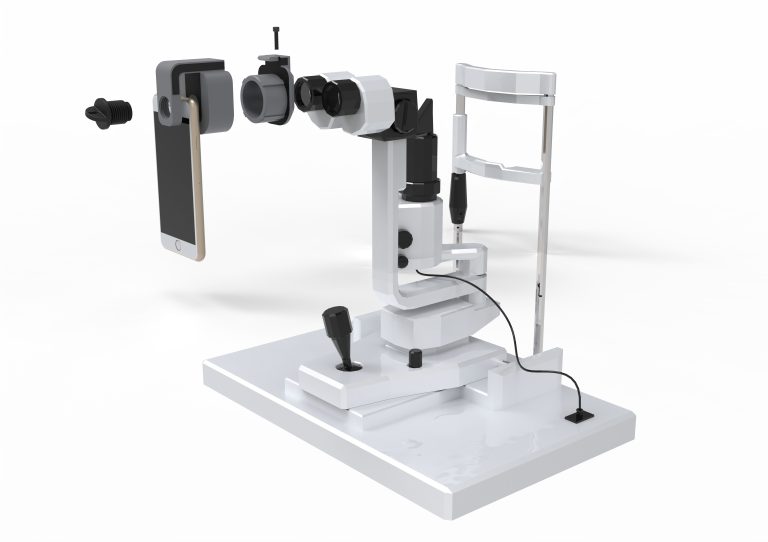
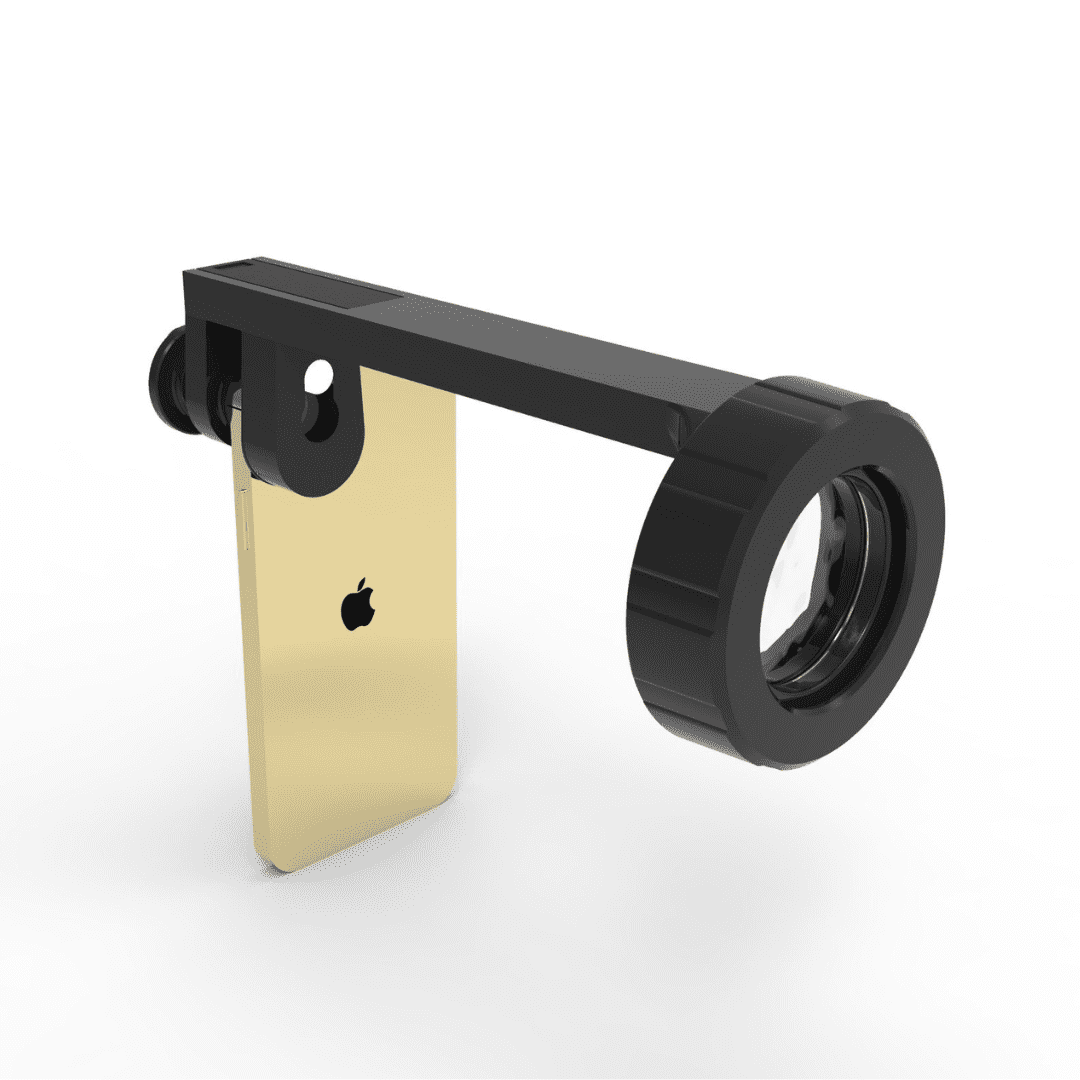
Document what you see
Two smartphone imaging tools built for everyday clinic use — one for the slit lamp, one for the fundus.
From Choroida — the team behind this siteReferences
- Ludwig IH, Parks MM, Getson PR, Kammerman LA. Rate of deterioration in accommodative esotropia correlated to the AC/A relationship. J Pediatr Ophthalmol Strabismus. 1988;25:8-12.
- Pediatric Eye Disease Investigator Group. A randomized trial comparing bifocal and single vision spectacles for children with accommodative esotropia. Arch Ophthalmol. 2009;127:255-263.
- von Noorden GK, Campos EC. Binocular Vision and Ocular Motility: Theory and Management of Strabismus. 6th ed. St Louis: Mosby; 2002.
- Ansons AM, Davis H. Diagnosis and Management of Ocular Motility Disorders. 4th ed. Chichester: Wiley-Blackwell; 2014.
Test yourself
A few questions straight from this article.
-
What mechanism produces the esodeviation in accommodative esotropia?
Accommodation and convergence are linked, so the effort a hyperopic eye makes to focus drives a convergence response beyond what binocular fusion requires. -
What defines refractive accommodative esotropia?
The esodeviation is fully corrected by full-time wear of the cycloplegic hyperopic correction and reappears when the glasses are removed. -
What characterises non-refractive, high AC/A accommodative esotropia?
An abnormally high accommodative convergence to accommodation ratio makes the near deviation larger, so bifocals are often needed for the near component. -
What is the hallmark of partially accommodative esotropia?
A residual angle remains despite glasses, and that nonaccommodative component may need additional treatment, sometimes including surgery. -
Why is full cycloplegia essential when refracting a child with suspected accommodative esotropia?
Without full cycloplegia the child's own accommodation masks or underestimates the hyperopia that is driving the deviation. -
How quickly should full alignment be expected after starting full hyperopic correction?
The full alignment effect can take weeks to appear as the child learns to rely on the glasses rather than on accommodative effort. -
When is surgery indicated in accommodative esotropia?
Surgery addresses only the nonaccommodative residual angle; operating on an eye already straight in glasses would overcorrect once the glasses went back on. -
What happens if glasses are stopped in accommodative esotropia once the eyes look straight?
Glasses are needed for alignment, not just clarity, so stopping them prematurely undoes the benefit and the esodeviation comes back. -
Amblyopia in accommodative esotropia is particularly common in which circumstance?
Amblyopia is common where the esotropia has gone unrecognised for some time, so every child is assessed for it at diagnosis. -
Why are outcomes in accommodative esotropia generally better than in infantile esotropia?
Correcting the hyperopia removes the accommodative drive itself, rather than relying on surgical alignment to restore binocular potential.

Writes and reviews the clinical articles on Educate. Every post is checked against peer-reviewed sources before it goes live.