Goldmann applanation tonometry measures intraocular pressure by determining the force required to flatten a fixed area of the cornea, and despite decades of newer devices entering the market, it remains the reference standard against which every other tonometer is judged.
Its persistence as the gold standard is not tradition for its own sake. Goldmann tonometry has the largest evidence base of any technique, direct correlation with landmark glaucoma trials, and, done correctly, a level of accuracy that alternative methods are still measured against rather than having genuinely surpassed.
The Imbert-Fick Principle
Goldmann tonometry is based on the Imbert-Fick law, which states that the pressure inside an ideal, infinitely thin-walled sphere equals the external force needed to flatten a given area of its surface, divided by that area.
The cornea is not an ideal thin-walled sphere: its own rigidity resists flattening, while surface tension from the tear film assists it, and these two opposing factors happen to roughly cancel out at the specific applanation diameter of 3.06 mm that the Goldmann instrument is designed to measure.
This calibration to real corneal biomechanics is what makes Goldmann tonometry clinically reliable despite the cornea not actually behaving like the idealised sphere the underlying physics assumes.
Technique
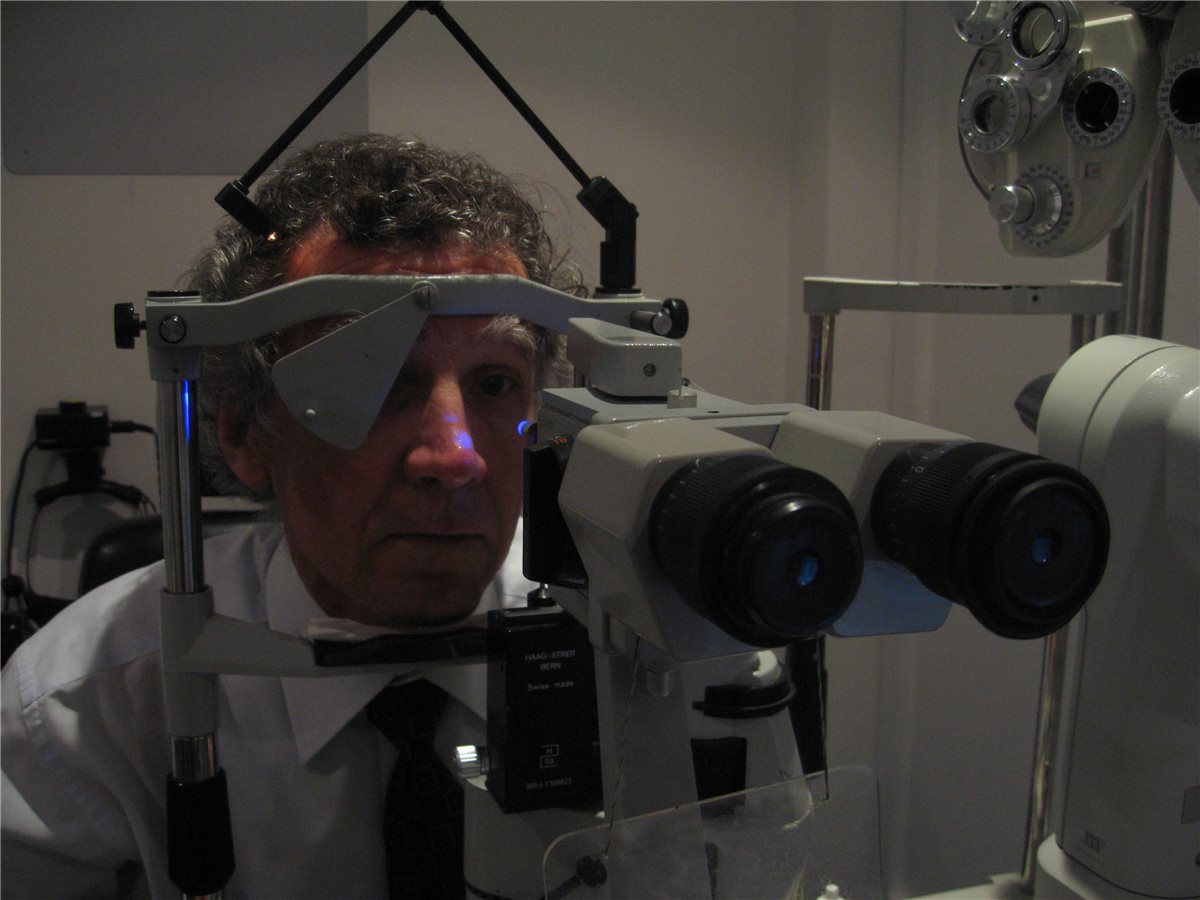
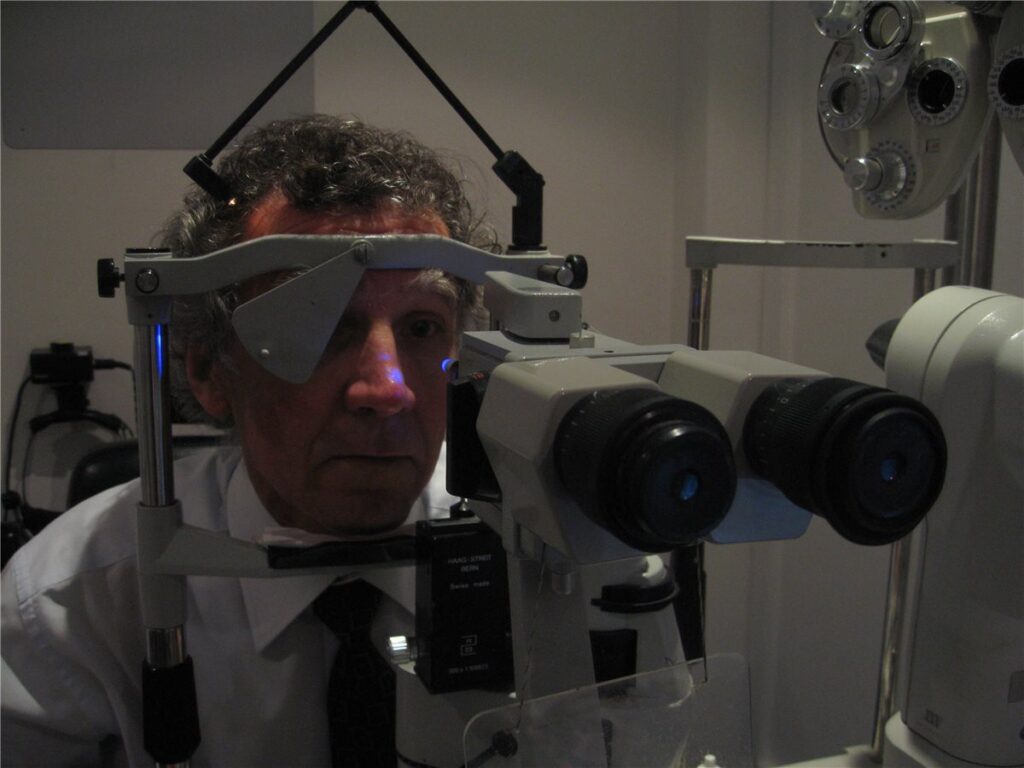
Topical anaesthetic combined with fluorescein dye is instilled onto the ocular surface, and the patient is positioned at the slit lamp with the Goldmann prism mounted on the tonometer arm.
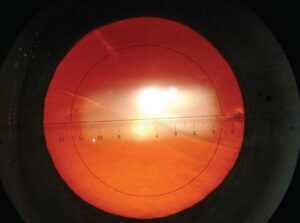
Under cobalt blue illumination, the examiner brings the prism into gentle contact with the central cornea and adjusts the applanating force using a calibrated dial until two fluorescein semicircles, seen through the prism, just touch at their inner edges.
The dial reading at this endpoint, multiplied by ten, gives the intraocular pressure in millimetres of mercury. The prism is cleaned or a disposable tip is used between patients as standard infection control practice.
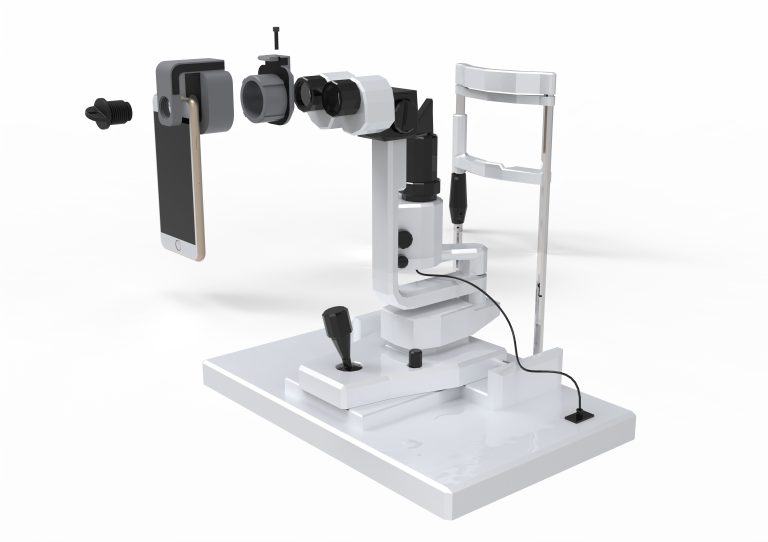
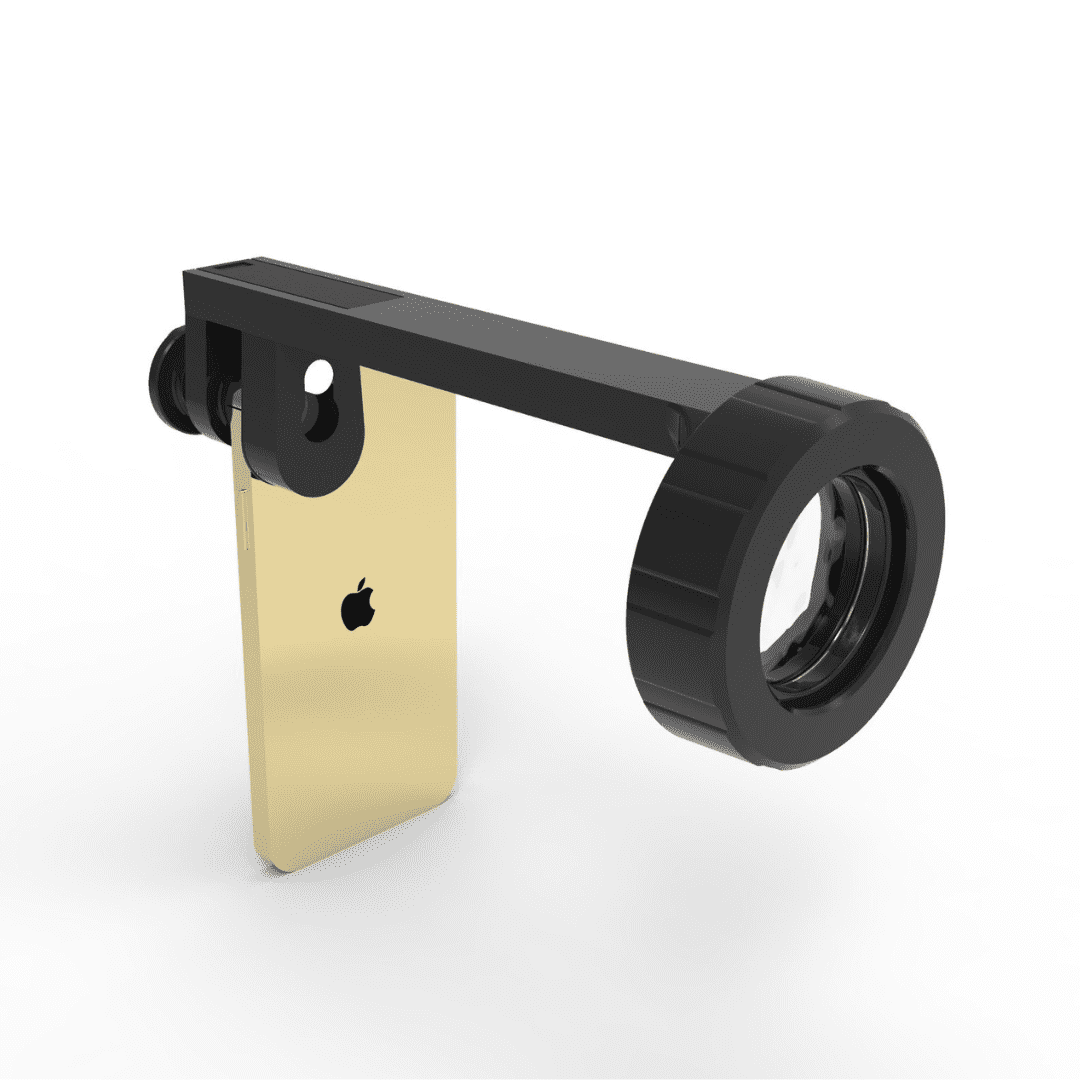
All-fit Slit-Lamp Adapter
Record and share exactly what you see at the slit lamp. One adapter fits any slit lamp or surgical microscope — and any smartphone.
From Choroida — the team behind this siteSources of Error
- Central corneal thickness significantly affects the reading: thicker corneas tend to produce falsely elevated measurements, and thinner corneas falsely low ones, relative to true intraocular pressure
- Excessive fluorescein produces thick mires and an overestimated reading, while too little fluorescein produces thin mires and underestimation
- Astigmatism greater than about 3 dioptres can distort the mires and requires the prism to be rotated to the appropriate axis to compensate
- Breath-holding or forced lid squeezing by an anxious patient can transiently raise measured pressure independent of true intraocular pressure
- Irregular corneal surface from scarring, oedema, or significant dry eye can make the endpoint genuinely difficult to judge accurately
Central corneal thickness is the single most important of these factors in everyday practice, which is why pachymetry is often measured alongside tonometry, particularly in glaucoma suspects and patients being monitored over time.
Alternatives to Goldmann Tonometry
Non-contact tonometry uses an air pulse to applanate the cornea and estimates pressure from the time taken to flatten it, offering a fast, anaesthetic-free option well suited to screening, though generally regarded as less accurate than Goldmann tonometry for clinical decision-making.
Dynamic contour tonometry uses a contoured tip designed to match corneal curvature rather than flatten it, aiming to reduce the influence of corneal biomechanical properties on the reading, with some evidence suggesting less dependence on corneal thickness than Goldmann tonometry.
Rebound tonometry uses a lightweight probe that briefly contacts the cornea, offering a portable, often better-tolerated option particularly useful in children or patients who cannot easily be positioned at a slit lamp.
Each of these alternatives has genuine practical advantages in specific settings, but none has displaced Goldmann tonometry as the reference standard for clinical decision-making in glaucoma, and readings from other devices are still often described in relation to how they compare with Goldmann measurements.
Clinical Significance
Accurate intraocular pressure measurement is central to glaucoma diagnosis, staging, and monitoring response to treatment, and the major glaucoma treatment trials that established current management standards were conducted using Goldmann tonometry, which is a large part of why it remains the reference point for clinical practice.
A single elevated reading should generally be interpreted with the sources of error above in mind, and repeated or corroborating measurements are often appropriate before treatment decisions are made on a borderline or unexpected result.
Prognosis and Clinical Impact
Reliable intraocular pressure measurement remains one of the most consequential single measurements in ophthalmology, directly shaping the diagnosis and management of glaucoma, the leading cause of irreversible blindness worldwide.
Understanding the sources of measurement error, particularly the influence of central corneal thickness, prevents both under-treatment of genuinely elevated pressure in thin corneas and unnecessary treatment of falsely elevated readings in thick corneas.
Despite the range of newer tonometry technologies now available, Goldmann applanation tonometry’s combination of accuracy, established evidence base, and direct link to the outcome trials that guide glaucoma management keeps it the technique every other method is still compared against.
Document what you see
Two smartphone imaging tools built for everyday clinic use — one for the slit lamp, one for the fundus.
From Choroida — the team behind this siteReferences
- Goldmann H, Schmidt T. Applanation tonometry. Ophthalmologica. 1957.
- Whitacre MM, Stein R. Sources of error with use of Goldmann-type tonometers. Survey of Ophthalmology. 1993.
- Doughty MJ, Zaman ML. Human corneal thickness and its impact on intraocular pressure measures. Survey of Ophthalmology. 2000.
- Goldmann Applanation Tonometry. EyeWiki, American Academy of Ophthalmology.
- Tonometry. StatPearls, NCBI Bookshelf.
Test yourself
A few questions straight from this article.
-
Which principle underlies Goldmann applanation tonometry?
The Imbert-Fick law states that pressure inside an ideal thin-walled sphere equals the external force needed to flatten a given surface area, divided by that area. -
At the Goldmann applanation diameter of 3.06 mm, which two opposing factors roughly cancel out?
Corneal rigidity resists flattening while tear film surface tension assists it, and these roughly cancel at the 3.06 mm diameter the instrument is designed around. -
What is the correct endpoint when performing Goldmann applanation tonometry?
Under cobalt blue light the examiner increases applanating force until the two fluorescein semicircles seen through the prism just touch at their inner edges. -
How is the intraocular pressure derived from the Goldmann tonometer dial reading?
The dial reading at the endpoint is multiplied by ten to give the intraocular pressure in millimetres of mercury. -
How does a thicker than average central cornea affect Goldmann tonometry readings?
Thicker corneas tend to give falsely high readings and thinner corneas falsely low ones, which is why pachymetry is often measured alongside tonometry in glaucoma suspects. -
What is the effect of instilling excessive fluorescein before Goldmann applanation tonometry?
Too much fluorescein thickens the mires and overestimates pressure, while too little produces thin mires and underestimation. -
How is significant corneal astigmatism above about three dioptres compensated for during Goldmann tonometry?
Astigmatism above roughly three dioptres distorts the mires, so the prism is rotated to the appropriate axis to compensate. -
What is the design aim of dynamic contour tonometry?
Its contoured tip matches corneal curvature rather than flattening it, and evidence suggests less dependence on corneal thickness than Goldmann tonometry. -
In which clinical situation is rebound tonometry particularly useful?
Rebound tonometry uses a lightweight probe in brief corneal contact, making it portable and better tolerated, especially in children or patients hard to position at a slit lamp. -
Which factor most explains why Goldmann tonometry remains the reference standard in glaucoma care?
The trials that established current glaucoma management standards were conducted with Goldmann tonometry, giving it a direct link to the evidence guiding treatment decisions.

Writes and reviews the clinical articles on Educate. Every post is checked against peer-reviewed sources before it goes live.