EUGOGO classification grades thyroid eye disease by severity as mild, moderate-to-severe or sight-threatening.
The European Group on Graves’ Orbitopathy designed it to link clinical findings with treatment decisions. Therefore, it complements the Clinical Activity Score, which measures inflammation instead.
Why the EUGOGO Classification Separates Severity From Activity
Activity describes ongoing inflammation, while severity describes structural and functional damage. For example, a patient can have severe proptosis with a quiet orbit. Because the two axes move independently, record both at every visit (see thyroid eye disease).
Mild Disease in the EUGOGO Classification
Mild disease has only a minor impact on daily life, so it seldom warrants the risks of immunosuppression or surgery. Typical features include one or more of the following:
- Lid retraction under 2 mm
- Mild soft tissue involvement
- Proptosis less than 3 mm above normal for race and sex
- Transient or absent diplopia
- Corneal exposure that responds to lubricants
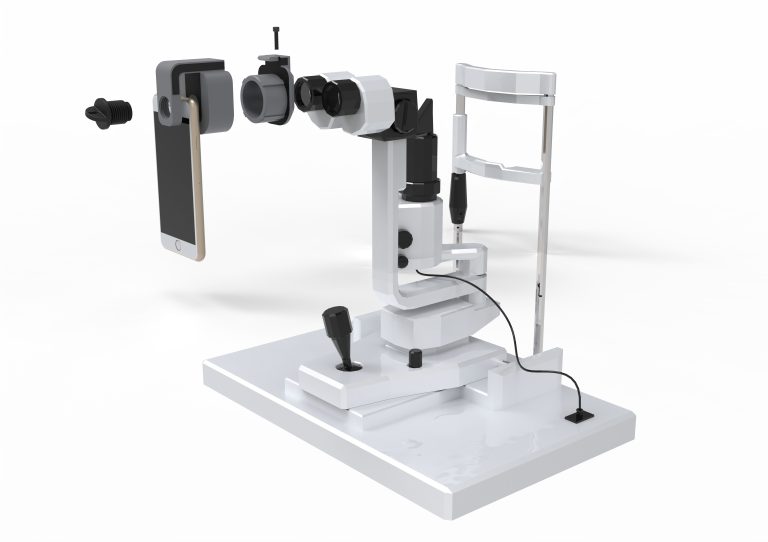
All-fit Slit-Lamp Adapter
Record and share exactly what you see at the slit lamp. One adapter fits any slit lamp or surgical microscope — and any smartphone.
From Choroida — the team behind this siteModerate-to-Severe Disease
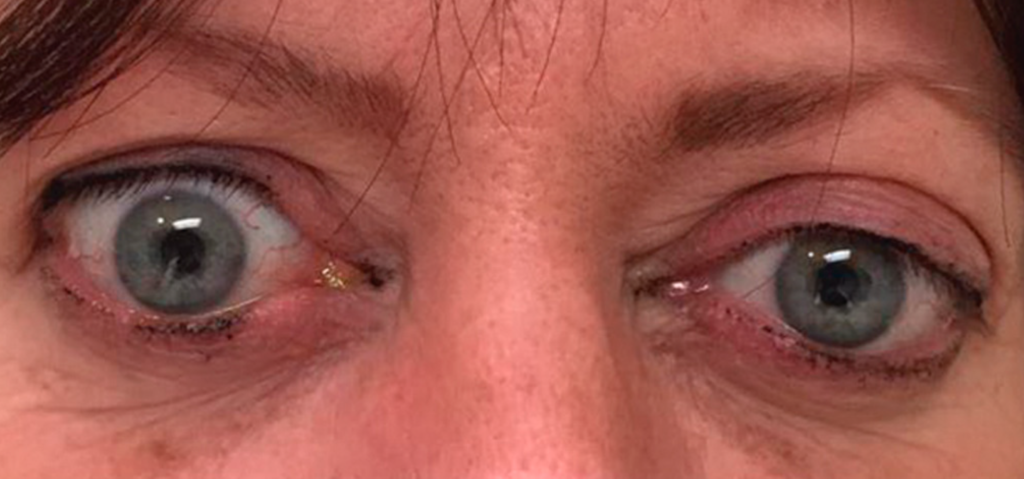
These patients have no threat to sight, but the disease affects daily life enough to justify immunosuppression when active, or surgery when inactive. Common findings include lid retraction of 2 mm or more and moderate or severe soft tissue involvement. Proptosis of 3 mm or more above normal and inconstant or constant diplopia also place patients here.
Sight-Threatening Disease in the EUGOGO Classification
This grade covers dysthyroid optic neuropathy and corneal breakdown, and the 2021 guideline also places rarer events, such as globe subluxation, in this group.
Examining for Optic Neuropathy
Optic neuropathy can occur without marked proptosis, because apical muscle crowding compresses the nerve. First, check visual acuity, color vision and pupils for a relative afferent defect. Then examine the disc, which may look normal, swollen or pale.
Corneal Breakdown
Lagophthalmos and a poor Bell’s phenomenon expose the inferior cornea, and punctate staining that settles with lubricants still counts as mild disease. However, an epithelial defect, stromal thinning or ulceration moves the patient to sight-threatening. Lid retraction often drives this exposure (see thyroid eye disease lid signs).
Treating Mild Disease
Every patient needs smoking cessation and stable euthyroidism, and local measures include lubricants and, when needed, temporary prisms. For mild active disease of recent onset, a six-month course of selenium is reasonable, and Marcocci and colleagues found better quality of life and less progression with selenium.
Treating Moderate-to-Severe Active Disease
The 2021 EUGOGO guideline recommends intravenous methylprednisolone plus mycophenolate as first line, and the MINGO trial supported adding mycophenolate to steroid pulses. A typical cumulative methylprednisolone dose is 4.5 g over 12 weeks, and a course should not exceed 8 g. Because high doses can injure the liver, monitor liver function during treatment.
Newer Biologic Options
Teprotumumab blocks the insulin-like growth factor 1 receptor, and in the OPTIC trial it reduced proptosis more than placebo in active moderate-to-severe disease. The 2021 guideline lists it among second-line options, alongside orbital radiotherapy, rituximab and tocilizumab. Discuss hearing changes, hyperglycemia and possible relapse before starting.
Treating Sight-Threatening Disease
For optic neuropathy, very high-dose intravenous methylprednisolone comes first, and if the response is poor within two weeks, urgent orbital decompression follows. Corneal breakdown needs intensive lubrication and lid protection, and some patients need tarsorrhaphy or decompression.
Inactive Disease and Surgery
Once inflammation has been quiet for several months, rehabilitative surgery can begin, and the usual order is decompression, then strabismus surgery, then eyelid surgery.
Combining CAS With the EUGOGO Classification
The Clinical Activity Score uses seven items, and a score of 3 or more suggests active disease, while severity then decides whether that activity deserves systemic treatment. For example, active mild disease usually needs supportive care and selenium, whereas active moderate-to-severe disease justifies steroids or biologics.
Counseling Patients About Their EUGOGO Classification
Patients often fear blindness when they hear “thyroid eye disease,” but many have mild disease that stabilizes over time. Explain that the grade can change, so new blurring, color fading or pain needs prompt review.
Limits of the EUGOGO Classification
The boundaries rely partly on clinical judgment and on the patient’s sense of impact, and proptosis norms vary by ethnicity, so exophthalmometry needs local reference values.
Pitfalls to Avoid
- Do not equate a quiet orbit with mild disease
- Never rely on proptosis alone to exclude optic neuropathy
- Do not start rehabilitative surgery during active inflammation
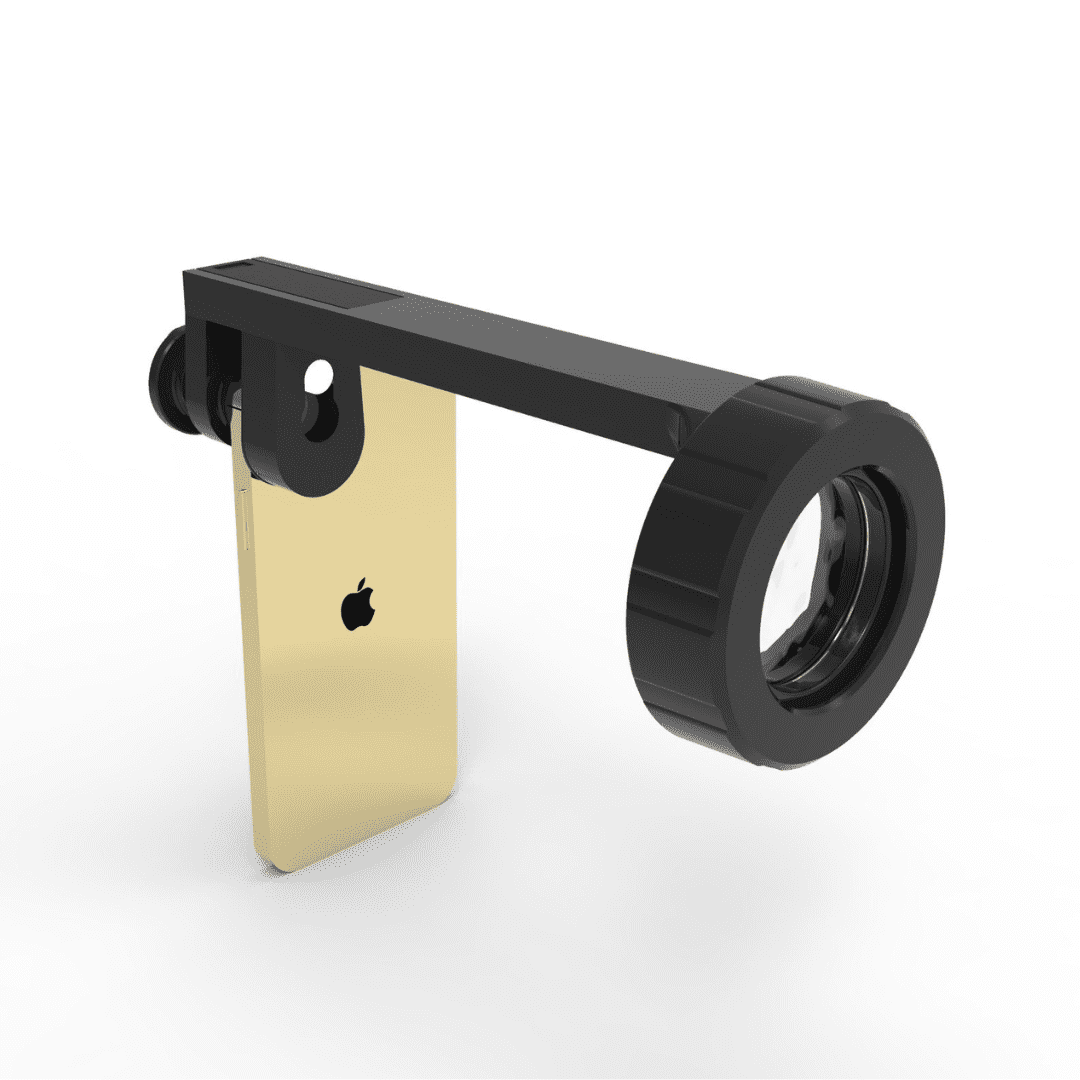
Document what you see
Two smartphone imaging tools built for everyday clinic use — one for the slit lamp, one for the fundus.
From Choroida — the team behind this siteReferences
- Bartalena L, Kahaly GJ, Baldeschi L, et al. The 2021 European Group on Graves’ orbitopathy (EUGOGO) clinical practice guidelines for the medical management of Graves’ orbitopathy. Eur J Endocrinol. 2021;185:G43-G67.
- Mourits MP, Koornneef L, Wiersinga WM, et al. Clinical criteria for the assessment of disease activity in Graves’ ophthalmopathy: a novel approach. Br J Ophthalmol. 1989;73:639-644.
- Marcocci C, Kahaly GJ, Krassas GE, et al. Selenium and the course of mild Graves’ orbitopathy. N Engl J Med. 2011;364:1920-1931.
- Kahaly GJ, Riedl M, König J, et al. Mycophenolate plus methylprednisolone versus methylprednisolone alone in active, moderate-to-severe Graves’ orbitopathy (MINGO): a randomised, observer-masked, multicentre trial. Lancet Diabetes Endocrinol. 2018;6:287-298.
- Douglas RS, Kahaly GJ, Patel A, et al. Teprotumumab for the treatment of active thyroid eye disease. N Engl J Med. 2020;382:341-352.
Test yourself
A few questions straight from this article.
-
In EUGOGO classification of thyroid eye disease, what does severity describe, as distinct from activity?
The article states that activity describes ongoing inflammation, while severity describes structural and functional damage. The two axes move independently, so both should be recorded at every visit. -
In thyroid eye disease, which proptosis measurement above normal for race and sex places a patient in moderate-to-severe EUGOGO disease?
Mild disease has proptosis less than 3 mm above normal, while proptosis of 3 mm or more places patients in the moderate-to-severe group. -
In thyroid eye disease, why can dysthyroid optic neuropathy occur without marked proptosis?
The article explains that apical muscle crowding compresses the nerve, so optic neuropathy can occur without marked proptosis. Proptosis alone must never be used to exclude it. -
When examining for thyroid eye disease optic neuropathy, which pupil finding should be checked for?
The exam includes visual acuity, color vision and pupils for a relative afferent defect. The disc may then look normal, swollen or pale. -
In thyroid eye disease, which corneal finding moves a patient from mild to sight-threatening EUGOGO disease?
Punctate staining that settles with lubricants still counts as mild disease. An epithelial defect, stromal thinning or ulceration makes it sight-threatening. -
For mild, active thyroid eye disease of recent onset, which supplement does the article say is reasonable for six months?
A six-month course of selenium is reasonable in mild active disease of recent onset. Marcocci and colleagues found better quality of life and less progression. -
According to the 2021 EUGOGO guideline, what is first-line treatment for moderate-to-severe active thyroid eye disease?
The guideline recommends IV methylprednisolone with mycophenolate first line, supported by the MINGO trial. Teprotumumab, radiotherapy, rituximab and tocilizumab are second-line options. -
In thyroid eye disease treated with intravenous methylprednisolone, what is the maximum cumulative dose the course should not exceed?
A typical cumulative dose is 4.5 g over 12 weeks, and a course should not exceed 8 g. Liver function should be monitored because high doses can injure the liver. -
In thyroid eye disease optic neuropathy, what follows if response to high-dose intravenous methylprednisolone is poor within two weeks?
Very high-dose intravenous methylprednisolone comes first for optic neuropathy. If the response is poor within two weeks, urgent orbital decompression follows. -
In inactive thyroid eye disease, what is the usual order of rehabilitative surgery?
Once inflammation has been quiet for several months, rehabilitative surgery can begin in the order decompression, strabismus surgery, then eyelid surgery.

Writes and reviews the clinical articles on Educate. Every post is checked against peer-reviewed sources before it goes live.