The BEVORDEX trial compared intravitreal bevacizumab with the dexamethasone implant in diabetic macular edema.
It was a small Australian randomized trial published in Ophthalmology in 2014, so it gave early head-to-head data on anti-VEGF therapy and steroid implants.
Why the BEVORDEX Trial Was Run
Anti-VEGF therapy needs frequent injections and some eyes respond poorly, while steroid implants last months but raise the pressure and speed up cataract. No randomized trial had compared the two classes directly, so the investigators designed a pragmatic comparison.
BEVORDEX Trial Design
The trial enrolled 88 eyes with center-involving diabetic macular edema, and eyes received bevacizumab 1.25 mg every four weeks or the dexamethasone 0.7 mg implant every 16 weeks. Retreatment depended on defined criteria in the first year, and the primary outcome was the share of eyes gaining 10 letters or more at 12 months.
Fundus Explorer Pro
Photograph the retinal findings described here with the phone already in your pocket — 22 D optics and built-in illumination in one handheld unit.
From Choroida — the team behind this siteBEVORDEX Trial Visual Results
The share of eyes that gained 10 letters or more did not differ between the groups, and mean acuity gains were similar at 12 months. Therefore, both treatments helped and neither proved superior, although the implant group showed more variable results among individual eyes.
Treatment Burden
The implant group needed far fewer injections over the year, while bevacizumab required many visits, often every month. The lower burden mattered to working patients, and as a result the implant was easier to schedule.
Anatomic Outcomes
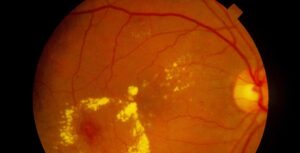
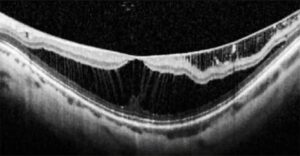
Central macular thickness fell in both groups, with the implant producing larger reductions in some eyes and a more variable response in others. Thickness also often rebounded at the end of the implant cycle, so timing of retreatment affected the outcome.
Cataract and Pressure
Phakic eyes in the implant group developed cataract at a higher rate, and intraocular pressure rose in a share of implant eyes, most of which responded to drops. The trial recorded few cases that needed surgery for pressure, so monitor pressure closely after each implant.
Pseudophakic Eyes
The implant works best in pseudophakic eyes, where cataract is no concern, while vitrectomized eyes also tolerate it and the drug clears more quickly there. The trial supported its use when anti-VEGF response is poor, but the evidence in pseudophakic eyes comes mainly from later studies such as MEAD (see dexamethasone implant trials).
Systemic Considerations
Patients with a recent cardiovascular event may prefer a steroid implant because anti-VEGF drugs carry a theoretical thromboembolic risk, although data stay mixed (see anti-VEGF systemic safety). Steroid exposure from an implant is low and mostly local, and therefore individual risk should guide the choice.
What Later Studies Added
DRCR Protocol U tested adding the implant to ongoing ranibizumab in eyes with persistent edema and found anatomic gains but no visual gain over ranibizumab alone. Protocol T also compared three anti-VEGF drugs and favored aflibercept in worse vision, so the best sequence still depends on the eye.
Using the BEVORDEX Trial in Clinic
Use bevacizumab first in most eyes, given its cost and safety record, and add or switch to the implant in pseudophakic eyes with a poor response. Also consider the implant when visits are hard to keep, and check pressure at least at one and three months.
Limits of the BEVORDEX Trial
The trial was small and ran only 12 months in its main report, and its retreatment rules and loading phases differ from current practice. The trial also did not include aflibercept or ranibizumab, and as a result readers should read its conclusions with caution.
Pitfalls to Avoid
- Do not give a steroid implant to a patient with uncontrolled glaucoma
- Never forget lens status when choosing the drug
- Do not extend the interval of bevacizumab without checking the fluid
- Never skip the pressure check after an implant
Patient Selection
Eligible eyes had center-involving edema, and some had earlier laser, while the trial excluded eyes with recent anti-VEGF or steroid treatment. Advanced glaucoma was also an exclusion, and therefore the findings suit a typical clinic population.
Treatment Schedule
The trial gave bevacizumab every four weeks and the implant every sixteen weeks when criteria were met. The trial also allowed rescue treatment later on, and as a result the burden clearly favored the implant.
Cost Considerations
Bevacizumab costs far less per dose than the implant, while the implant costs more but needs fewer visits. Indirect costs also matter to patients with jobs, and therefore total cost depends on the setting.
Document what you see
Two smartphone imaging tools built for everyday clinic use — one for the slit lamp, one for the fundus.
From Choroida — the team behind this siteReferences
- Gillies MC, Lim LL, Campain A, et al. A randomized clinical trial of intravitreal bevacizumab versus intravitreal dexamethasone for diabetic macular edema: the BEVORDEX study. Ophthalmology. 2014;121:2473-2481.
- Boyer DS, Yoon YH, Belfort R Jr, et al. Three-year, randomized, sham-controlled trial of dexamethasone intravitreal implant in patients with diabetic macular edema. Ophthalmology. 2014;121:1904-1914.
- Maturi RK, Glassman AR, Liu D, et al. Effect of adding dexamethasone to continued ranibizumab treatment in patients with persistent diabetic macular edema: a DRCR Network randomized clinical trial. JAMA Ophthalmol. 2018;136:29-38.
- Wells JA, Glassman AR, Ayala AR, et al. Aflibercept, bevacizumab, or ranibizumab for diabetic macular edema. N Engl J Med. 2015;372:1193-1203.
Test yourself
A few questions straight from this article.
-
What did the BEVORDEX trial compare in eyes with diabetic macular edema?
The BEVORDEX trial compared intravitreal bevacizumab with the dexamethasone implant in diabetic macular edema, giving early head-to-head data on anti-VEGF therapy and steroid implants. -
In the BEVORDEX trial of diabetic macular edema, what was the primary outcome at 12 months?
The primary outcome was the share of eyes gaining 10 letters or more at 12 months. -
What was the dosing schedule of the two arms in the BEVORDEX diabetic macular edema trial?
Eyes received bevacizumab 1.25 mg every four weeks or the dexamethasone 0.7 mg implant every 16 weeks when criteria were met. -
How did visual results compare between bevacizumab and the dexamethasone implant in the BEVORDEX trial?
The share gaining 10 letters or more did not differ and mean acuity gains were similar at 12 months, so neither treatment proved superior. The implant group showed more variable results among eyes. -
What treatment burden difference was seen in the BEVORDEX trial for diabetic macular edema?
The implant group needed far fewer injections, while bevacizumab required many visits, often monthly. This made the implant easier to schedule for working patients. -
What was noted about central macular thickness at the end of the dexamethasone implant cycle in BEVORDEX?
Thickness fell in both groups, but it often rebounded at the end of the implant cycle, so timing of retreatment affected the outcome. -
Which adverse effects were more frequent with the dexamethasone implant in the BEVORDEX diabetic macular edema trial?
Phakic implant eyes developed cataract more often, and pressure rose in a share of implant eyes, most of which responded to drops. Few needed pressure surgery. -
Which eyes with diabetic macular edema does the article say the dexamethasone implant suits best?
The implant works best in pseudophakic eyes, where cataract is no concern. Vitrectomized eyes also tolerate it, though the drug clears more quickly there. -
What did DRCR Protocol U find when adding the dexamethasone implant to ongoing ranibizumab in persistent diabetic macular edema?
Protocol U tested adding the implant to ongoing ranibizumab in eyes with persistent edema and found anatomic gains but no visual gain over ranibizumab alone. -
According to the article, what is a reasonable first-line approach in diabetic macular edema, given BEVORDEX and later studies?
The article advises bevacizumab first in most eyes given its cost and safety record, adding or switching to the implant in pseudophakic eyes with a poor response. Pressure should be checked at one and three months.

Writes and reviews the clinical articles on Educate. Every post is checked against peer-reviewed sources before it goes live.