
CASE REPORT
A 33-year-old male presented complaining of loss of vision in the lower half of the right eye for three weeks’ duration. When he became symptomatic he had been staying at the Siachen glacier (5472 meters above mean sea level) for three months.
Ten days after the onset of symptoms he came down to the plains and presented. He had no associated systemic disease and was a non-smoker. Ocular examination showed the best corrected visual acuity of 6/6 in both eyes.
There was a relative afferent pupillary defect in the right eye. The anterior segment of both eyes was normal with intraocular pressure (IOP) of 14mm Hg in both eyes.
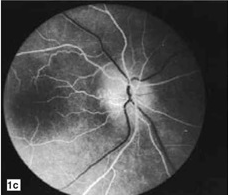
A Fundoscopy of the right eye showed pale disc edema in the superior half of the optic disc, while the left eye was normal. Fundus fluorescein angiography of the right eye showed initial hypofluorescence with late optic disc staining in the superior half.
Visual field examination (30-2 threshold list) on Humphrey’s perimeter showed an inferior altitudinal defect in the right eye with the normal visual field in the left eye. A diagnosis of High Altitude Retinopathy was confirmed.
DISEASE
High altitude retinopathy (HAR) encompasses a spectrum of pathological retinal changes occurring in unacclimatized individuals exposed to hypobaric hypoxia encountered at high altitudes.
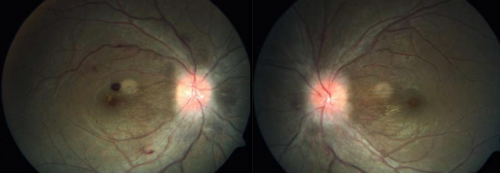
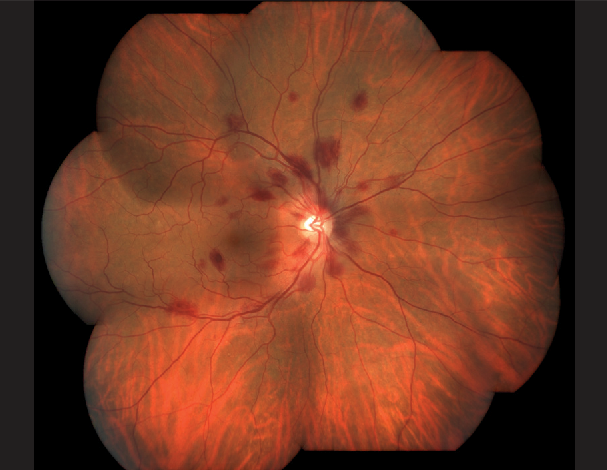
Affected individuals are usually asymptomatic and typical features, including retinal hemorrhages and papilledema, generally resolve spontaneously without adverse visual outcomes on the descent to lower altitudes.
High altitude retinopathy (HAR) is one of four clinical entities of high-altitude illness (HAI) that includes acute mountain sickness (AMS), high altitude cerebral edema (HACE), and high altitude pulmonary edema (HAPE).
HAR occurs with travel to elevations above 2500 meters (~8200 feet) and is generally characterized by symptoms of headache, nausea, vomiting, and tiredness, but may affect the lungs, brain, and eyes differently among individuals.
Fundus Explorer Pro
Photograph the retinal findings described here with the phone already in your pocket — 22 D optics and built-in illumination in one handheld unit.
From Choroida — the team behind this siteMANAGEMENT
General treatment:
High altitude retinopathy (HAR) is usually asymptomatic, and typical retinal changes are often only detected incidentally after descent to lower altitudes or not detected at all.
If vision-involving HAR develops at high altitudes, general treatment measures include immediate descent to lower altitudes and administration of supplemental oxygen.
Medical therapy:
The majority of cases of High altitude retinopathy (HAR) resolve spontaneously with no long-term adverse visual outcomes. Besides the general measures mentioned above, no specific therapies for HAR have been proven, although it may be necessary to treat the acute manifestations of altitude illness or the chronic ocular complications of the condition (e.g. retinal vein occlusion).
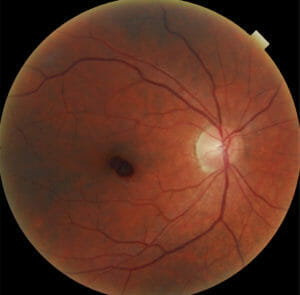
Medications such as NSAIDs, corticosteroids, and acetazolamide have been shown to have no impact on retinal hemorrhages The use of furosemide is inconclusive.
Although no systemic medications are indicated specifically for High altitude retinopathy (HAR), many are suggested for the other three clinical entities of high altitude illness (HAI): acute mountain sickness (AMS), high altitude cerebral edema (HACE), and high altitude pulmonary edema (HAPE):
- Carbonic anhydrase inhibitors: acetazolamide and methazolamide
- Steroids: budesonide, prednisone, and dexamethasone
- Bronchodilator drugs: salmeterol, theophyline and montelukast
- Selective inhibitors of phosphodiesterase type 5 (PDE5): tadalafil and sildenafil
- Calcium modulators: nifedipine and flunarizine
- Non-steroidal anti-inflammatory drugs (NSAIDs) and other analgesics: aspirin, carbasalate and ibuprofen.
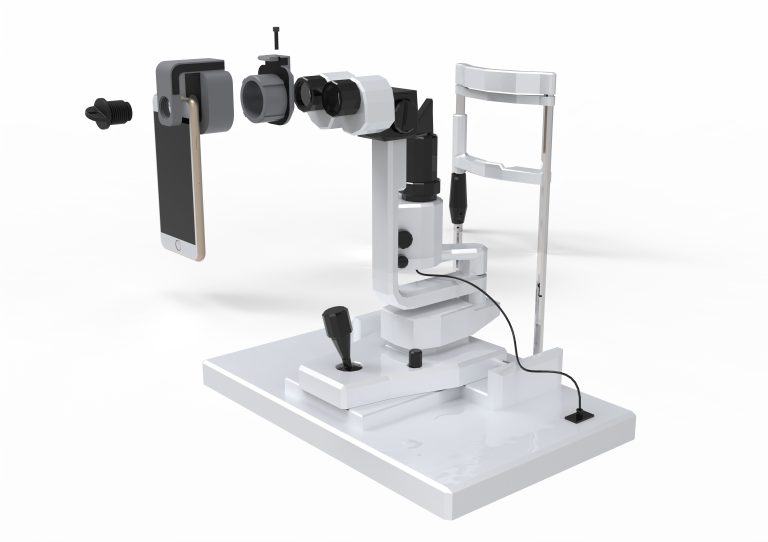
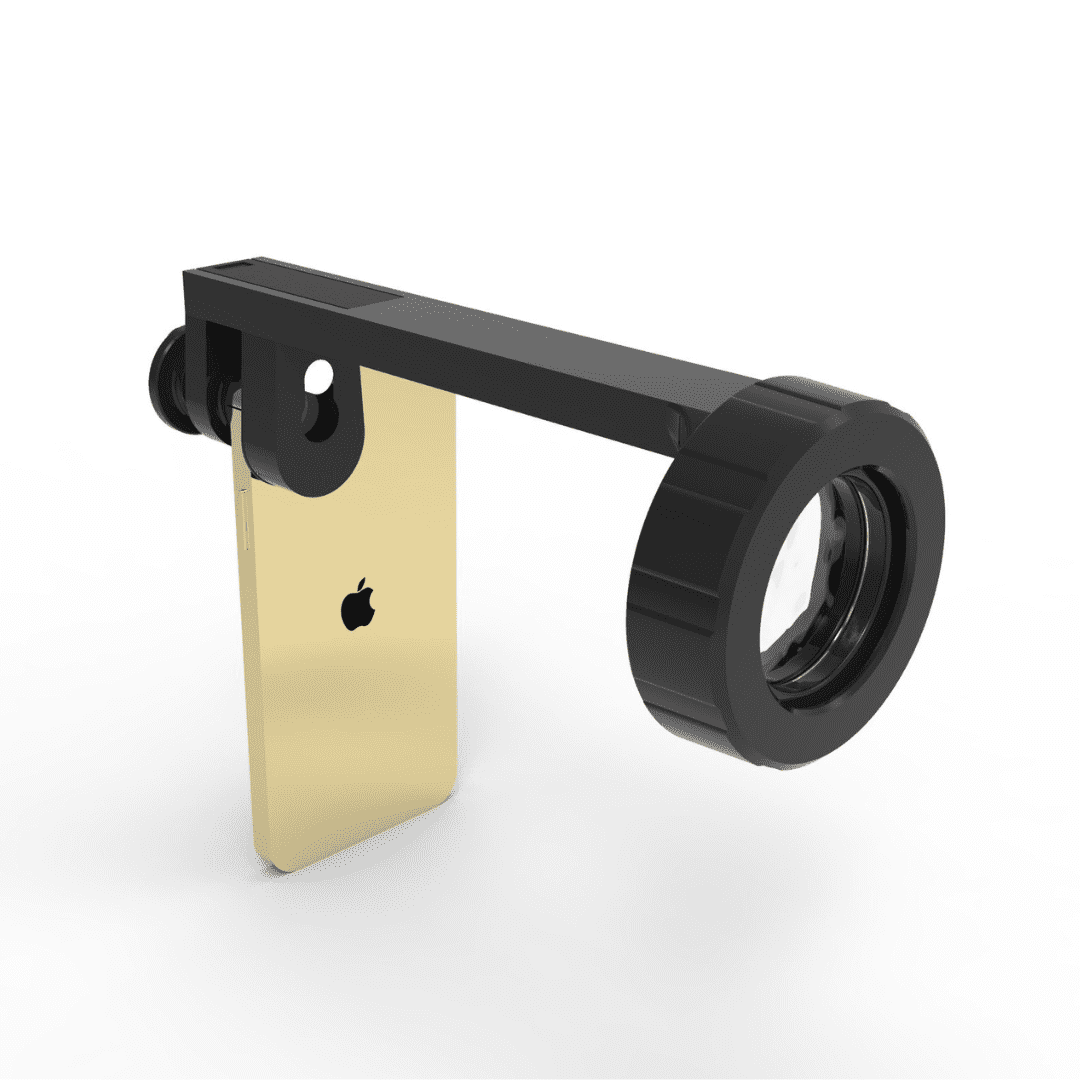
Document what you see
Two smartphone imaging tools built for everyday clinic use — one for the slit lamp, one for the fundus.
From Choroida — the team behind this siteREFERENCES
- Nieto Estrada VH, Molano Franco D, Medina RD, Gonzalez Garay AG, Martí-Carvajal AJ, Arevalo-Rodriguez I. Interventions for preventing high altitude illness: Part 1. Commonly-used classes of drugs. Cochrane Database Syst Rev. 2017 Jun 27;6(6): CD009761. doi 10.1002/14651858.CD009761.pub2. PMID: 28653390; PMCID: PMC6481751.
- Rennie D, Morrissey J. Retinal Changes in Himalayan Climbers. Arch Ophthalmol. 1975;93:395-400. doi:10.1001/archopht.1975.01010020409001.
- Shults WT, Swan KC. High Altitude Retinopathy in Mountain Climbers. Arch Ophthalmol. 1975;93:404-408. doi:10.1001/archopht.1975.010100204180.
- Schneider M, Bernasch D, Weymann J, Holle R, Bartsch P. Acute mountain sickness: influence of susceptibility, preexposure, and ascent rate. Med Sci Sports Exerc. 2002;34(12):1886–1891. doi:10.1097/00005768-200212000-00005.
- Bloch KE, Turk AJ, Maggiorini M, Hess T, Merz T, Barthelmes D, et al. Effect of ascent protocol on acute mountain sickness and success at Muztagh Ata, 7546 m. High Alt Med Biol. 2009;10(1):25–32. doi:10.1089/ham.2008.1043.
- McFadden DM, Houston CS, Sutton JR, Powles ACP, Gray GW, Roberts RS. High-Altitude Retinopathy. JAMA. 1981;245:581-586. doi:10.1001/jama.1981.03310310023016.
Test yourself
A few questions straight from this article.
-
How is high altitude retinopathy (HAR) best defined?
HAR is a spectrum of pathological retinal changes affecting unacclimatized individuals exposed to the hypobaric hypoxia of high altitude. -
Above roughly what elevation does high altitude retinopathy typically occur?
The article states HAR occurs with travel to elevations above 2500 meters, roughly 8200 feet. -
High altitude retinopathy is one of four clinical entities of which illness group?
HAR sits alongside acute mountain sickness, high altitude cerebral edema and high altitude pulmonary edema as the four entities of high-altitude illness. -
Which retinal findings are described as typical of high altitude retinopathy?
Typical features include retinal hemorrhages and papilledema, which usually resolve spontaneously on descent to lower altitudes. -
In the reported high altitude retinopathy case, what did fundoscopy of the right eye show?
The patient who had spent three months at the Siachen glacier showed pale disc edema confined to the superior half of the right optic disc. -
What visual field defect was found in the reported high altitude retinopathy case?
Humphrey 30-2 threshold testing showed an inferior altitudinal defect in the right eye with a normal left field, matching the superior disc involvement. -
What did fundus fluorescein angiography show in the reported case of high altitude retinopathy?
Angiography of the affected right eye showed initial hypofluorescence followed by late staining of the superior half of the optic disc. -
What are the general treatment measures for vision-involving high altitude retinopathy?
If vision-involving HAR develops at altitude, general treatment is immediate descent to lower altitude together with supplemental oxygen. -
Which drugs have been shown to have no impact on the retinal hemorrhages of high altitude retinopathy?
NSAIDs, corticosteroids and acetazolamide have all been shown not to affect the retinal hemorrhages of HAR; the role of furosemide is inconclusive. -
What is the usual visual outcome in high altitude retinopathy?
The majority of HAR cases resolve spontaneously with no long-term adverse visual outcome, although chronic complications such as retinal vein occlusion may need treatment.
