Teprotumumab is a monoclonal antibody that blocks the insulin-like growth factor 1 receptor and treats thyroid eye disease.
It reduces proptosis and diplopia in a way that steroids do not. Therefore, it has changed how clinicians approach moderate to severe active disease.
Mechanism of Teprotumumab
The IGF-1 receptor forms a complex with the thyrotropin receptor in orbital fibroblasts, and blocking it reduces the signal that drives inflammation and tissue expansion. The effect also reduces hyaluronan production and muscle volume, and because the pathway is central, the drug acts on the cause.
The Phase 2 Teprotumumab Trial
Smith and colleagues tested the drug in active disease in 2017, and proptosis response, defined as a reduction of two millimeters or more, occurred in 71 percent of treated patients and 20 percent of controls. The clinical activity score also fell more with treatment, so the trial gave strong early evidence.
All-fit Slit-Lamp Adapter
Record and share exactly what you see at the slit lamp. One adapter fits any slit lamp or surgical microscope — and any smartphone.
From Choroida — the team behind this siteThe OPTIC Trial
Douglas and colleagues reported OPTIC in 2020, where 83 percent of treated patients met the proptosis endpoint compared with 10 percent of controls. Diplopia also improved in about two thirds of treated patients, and because the effect was large, the drug was approved.
Dosing of Teprotumumab
The regimen is eight infusions given every three weeks, with a first dose of 10 milligrams per kilogram followed by 20 milligrams per kilogram. Each infusion takes 60 to 90 minutes, so patients need planning for visits.
Chronic Disease
Later work tested patients with long duration and low activity, and Douglas and colleagues reported improvement in proptosis in this group. The benefit was smaller than in active disease, and because the data are newer, follow evolving guidance.
Side Effects of Teprotumumab
Muscle spasms, nausea, fatigue and alopecia are common, and hyperglycemia can occur, especially in patients with diabetes. Infusion reactions are also possible, so monitor glucose and counsel patients.
Hearing Impairment With Teprotumumab
Hearing loss, tinnitus and ear fullness occur in a share of patients, and Sears and colleagues described hearing dysfunction after treatment. The effect can persist in some patients, and because it can be permanent, baseline audiometry is advisable.
Contraindications and Cautions
Avoid the drug in pregnancy, and use caution in patients with inflammatory bowel disease. Review diabetes control before treatment, and screen for risk factors.
Relapse After Teprotumumab
A minority of patients relapse after stopping, and retreatment is possible, with similar benefit in some reports. Long-term data are still limited, and because relapse occurs, plan follow-up.
Position in Guidelines
The European guidelines favor intravenous methylprednisolone as first-line therapy, and they consider other agents for steroid-resistant or severe cases. Teprotumumab fills a gap in patients with proptosis and diplopia, so individualize the choice.
Orbital Surgery and Radiotherapy
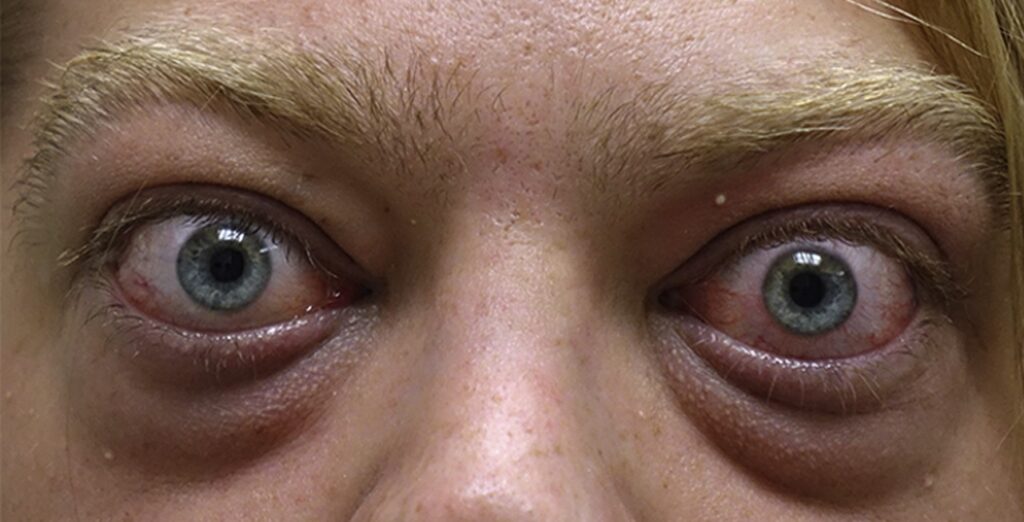
Surgery remains important in inactive disease and for residual deformity, and decompression, strabismus surgery and lid surgery follow a set order. Radiotherapy has limited use, and because treatment is staged, coordinate care.
Monitoring
Measure proptosis, motility and activity at each visit, and check hearing and glucose. Photograph the patient for comparison, because changes are gradual and records help.
Patient Selection
Choose patients with active, moderate to severe disease and proptosis, and also consider those with troublesome diplopia. Because inactive disease responds less, use the clinical activity score and imaging to judge.
Effect on Diplopia and Muscle Volume
In OPTIC, diplopia improved more with treatment than with placebo, and extraocular muscle volume also fell on imaging. Therefore, the drug can reduce the need for strabismus surgery in some patients.
Combining Treatment With Surgery
Orbital decompression may still be needed for residual proptosis or optic neuropathy, and strabismus and lid surgery follow after stabilization. Because timing matters, coordinate with the orbital surgeon.
Optic Neuropathy
Compressive optic neuropathy needs prompt steroids or decompression, and data on the drug in this setting are limited. Do not delay urgent treatment while waiting for the drug.
Cost and Access
The drug is expensive, and coverage varies, while infusion centers are needed for administration. Therefore, start the approval process early.
Practical Counseling Before Infusions
Explain the schedule, the number of infusions and the expected benefit, and tell patients about muscle cramps and hearing symptoms, asking them to report any change early. Advise a baseline hearing test and a glucose check, and because adherence matters, give a written schedule.
Monitoring During and After Therapy
Review proptosis, diplopia and activity at each infusion, and stop the drug and seek advice if hearing symptoms develop. Plan follow-up for several months after the last dose to check for relapse, and therefore treat the course as a monitored program and not as a single prescription.


Document what you see
Two smartphone imaging tools built for everyday clinic use — one for the slit lamp, one for the fundus.
From Choroida — the team behind this siteReferences
- Smith TJ, Kahaly GJ, Ezra DG, et al. Teprotumumab for thyroid-associated ophthalmopathy. N Engl J Med. 2017;376:1748-1761.
- Douglas RS, Kahaly GJ, Patel A, et al. Teprotumumab for the treatment of active thyroid eye disease. N Engl J Med. 2020;382:341-352.
- Sears CM, Azad AD, Amarikwa L, et al. Hearing dysfunction after treatment with teprotumumab for thyroid eye disease. Am J Ophthalmol. 2022;240:1-13.
- Bartalena L, Kahaly GJ, Baldeschi L, et al. The 2021 European Group on Graves’ orbitopathy (EUGOGO) clinical practice guidelines for the medical management of Graves’ orbitopathy. Eur J Endocrinol. 2021;185:G43-G67.
Test yourself
A few questions straight from this article.
-
Which receptor does the monoclonal antibody teprotumumab block in thyroid eye disease?
Teprotumumab is a monoclonal antibody against the insulin-like growth factor 1 receptor (IGF-1R). -
In thyroid eye disease, the IGF-1 receptor forms a signalling complex with which receptor in orbital fibroblasts?
IGF-1R complexes with the thyrotropin receptor in orbital fibroblasts; blocking it reduces the inflammation, hyaluronan production and tissue expansion this signal drives. -
In the OPTIC trial of teprotumumab for active thyroid eye disease, what share of treated patients met the proptosis endpoint?
OPTIC reported that 83 percent of treated patients met the proptosis endpoint compared with 10 percent of controls. -
In the phase 2 teprotumumab trial in thyroid eye disease, how was a proptosis response defined?
Response was a proptosis reduction of two millimetres or more, reached by 71 percent of treated patients versus 20 percent of controls. -
What is the standard teprotumumab regimen for thyroid eye disease?
Eight infusions are given three weeks apart: a first dose of 10 mg/kg, then 20 mg/kg, each infusion taking 60 to 90 minutes. -
Which adverse effect of teprotumumab can be permanent and makes baseline audiometry advisable?
Hearing loss, tinnitus and ear fullness occur in some patients and can persist, so baseline hearing testing is advised and the drug is stopped if symptoms develop. -
Which laboratory value needs monitoring during teprotumumab treatment, especially in patients with diabetes?
Hyperglycaemia can occur on teprotumumab, particularly in diabetics, so diabetes control is reviewed beforehand and glucose is checked during therapy. -
Teprotumumab for thyroid eye disease should be used with caution in patients with which comorbidity?
The drug should be avoided in pregnancy and used with caution in inflammatory bowel disease. -
Which therapy do European guidelines favour as first-line treatment for moderate to severe active thyroid eye disease?
European guidelines favour IV methylprednisolone first, reserving other agents for steroid-resistant or severe cases; teprotumumab fills a gap where proptosis and diplopia dominate. -
How should compressive optic neuropathy in thyroid eye disease be managed in relation to teprotumumab?
Compressive optic neuropathy needs prompt steroids or decompression; data on teprotumumab here are limited, so urgent treatment is not delayed waiting for it.

Writes and reviews the clinical articles on Educate. Every post is checked against peer-reviewed sources before it goes live.