Protocol W and PANORAMA tested whether anti-VEGF injections can treat moderate to severe nonproliferative diabetic retinopathy.
Both trials used aflibercept in eyes without center-involving macular edema.
Therefore, they changed the debate on how early to treat diabetic retinopathy.
Why Protocol W and PANORAMA Tested Early Treatment
Observation is the standard for nonproliferative disease without edema.
Treatment starts only after proliferative disease or macular edema develops.
However, some eyes reach complications and lose vision despite close follow-up.
As a result, trials asked if earlier treatment prevents these events.
PANORAMA Trial Design
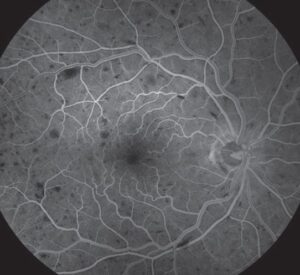
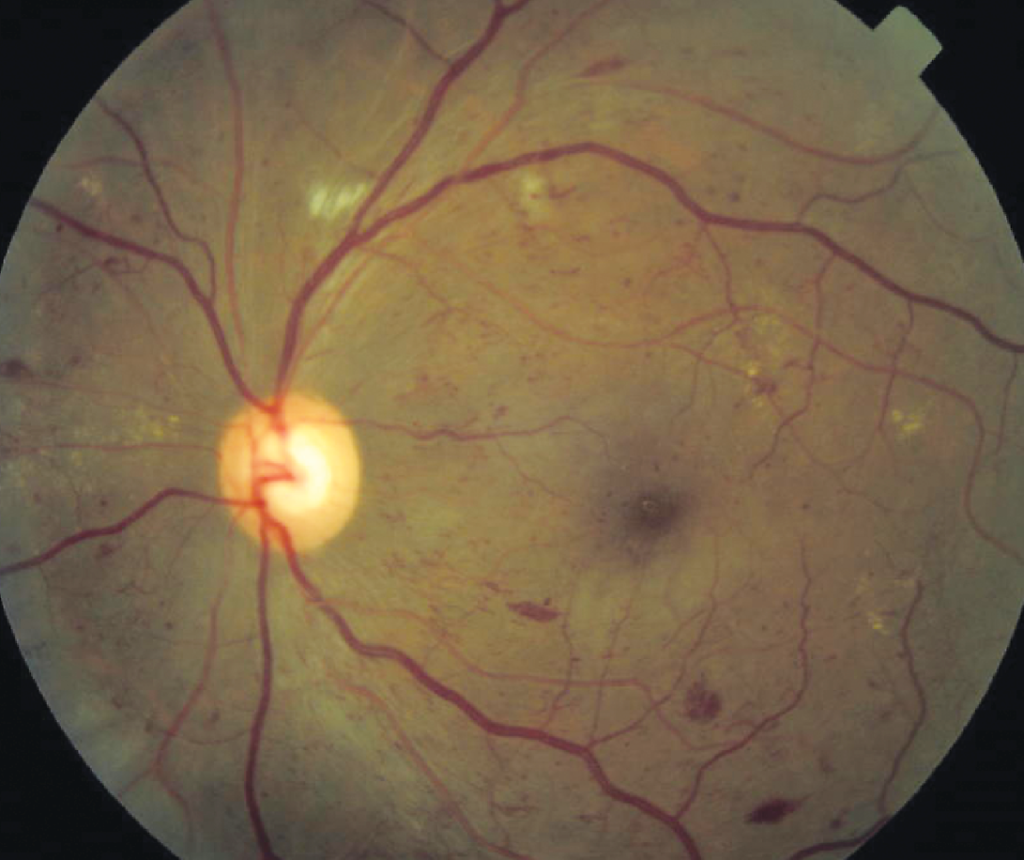
PANORAMA enrolled about 400 eyes with moderately severe to severe nonproliferative disease.
Eyes received aflibercept every 16 weeks after five initial doses, aflibercept every 8 weeks after loading, or sham.
The primary outcome was a two-step or greater improvement on the Diabetic Retinopathy Severity Scale at week 24.
Also, a second analysis looked at week 52.
Fundus Explorer Pro
Photograph the retinal findings described here with the phone already in your pocket — 22 D optics and built-in illumination in one handheld unit.
From Choroida — the team behind this sitePANORAMA Results
A large majority of treated eyes improved by two or more steps, compared with a small share of sham eyes.
The effect held at week 52 in both treatment arms.
Also, fewer treated eyes developed vision-threatening complications.
Therefore, aflibercept reversed disease severity as measured on the scale.
Protocol W Trial Design
Protocol W enrolled 399 patients with moderate to severe nonproliferative disease and no center-involving edema.
Eyes received aflibercept 2 mg or sham injections at baseline, 1, 2 and 4 months, and then every 4 months through two years.
Treatment in both groups continued if proliferative disease or edema developed.
In addition, the primary outcome was a proliferative event or center-involving edema with vision loss.
Protocol W Results at Two Years
Vision-threatening complications developed in about 16 percent of aflibercept eyes versus about 44 percent of sham eyes.
Most complications in the sham group were proliferative disease.
Also, aflibercept eyes had a lower rate of macular edema.
Therefore, anti-VEGF therapy reduced the risk of progression.
Protocol W at Four Years
Visual acuity at four years did not differ between the two groups.
Many sham eyes received treatment when complications appeared, and they recovered well.
In addition, aflibercept eyes needed many injections over the period.
As a result, the early treatment advantage on vision was small.
What Protocol W and PANORAMA Share
Both trials improved severity scores and cut complications.
Neither showed a clear long-term gain in vision.
Also, the Diabetic Retinopathy Severity Scale can change without any change in function.
Because of this, the difference between the two readouts matters.
Protocol W and PANORAMA: Injection Burden
Early treatment means many injections over several years.
In Protocol W, a large share of sham eyes needed treatment anyway, which shows that close follow-up works.
Also, patients lost to follow-up are at risk of missed complications.
Therefore, think about adherence before starting treatment.
Rebound After Stopping Protocol W and PANORAMA Treatment
The improvement in severity can fade if injections stop.
Some eyes return to the previous level of disease within months.
In addition, a worsening can occur faster than before.
Finally, plan a monitoring schedule for any patient who stops.
Who May Benefit After Protocol W and PANORAMA
Consider early treatment in eyes with severe nonproliferative disease and poor adherence to follow-up.
Also consider it before cataract surgery in patients with progressive disease (see diabetic macular edema).
In contrast, patients who attend reliably can often wait and treat if complications arise.
Therefore, discuss options with each patient.
Systemic Control
Glucose, blood pressure and lipid control remain the base of treatment.
Also, fenofibrate lowers the progression of retinopathy in trials such as FIELD and ACCORD-Eye.
Because of this, systemic care should not wait for retinal treatment.
In addition, screening intervals should match the severity.
Pitfalls to Avoid
- Do not treat a mild nonproliferative eye with anti-VEGF drugs outside trial criteria
- Never read a severity score gain as a vision gain
- Do not stop injections without a follow-up plan
- Never neglect systemic risk factors
Patient Selection in the Trials
Protocol W enrolled eyes with scale levels of 43 to 53 and no center-involving edema.
PANORAMA enrolled eyes with levels of 47 to 53.
Also, both excluded recent treatment.
Therefore, the findings apply to moderate to severe disease only.
Limits of the Severity Scale
The scale grades fundus photographs and does not measure function.
A two-step improvement lowers later risk but does not prove a vision gain.
Also, grading depends on image quality.
Therefore, use the scale as a surrogate marker.
Cost and Access
Many injections over several years are costly.
Payers often cover treatment only after proliferative disease or edema develops.
Also, travel and time add indirect costs.
As a result, cost shapes the real use of early treatment.
For the latest studies, see the PubMed results for Protocol W and PANORAMA.


Document what you see
Two smartphone imaging tools built for everyday clinic use — one for the slit lamp, one for the fundus.
From Choroida — the team behind this siteReferences
- Maturi RK, Glassman AR, Josic K, et al. Effect of intravitreous anti-vascular endothelial growth factor vs sham treatment for prevention of vision-threatening complications of diabetic retinopathy: the Protocol W randomized clinical trial. JAMA Ophthalmol. 2021;139:701-712.
- Brown DM, Wykoff CC, Boyer D, et al. Evaluation of intravitreal aflibercept for the treatment of severe nonproliferative diabetic retinopathy: results from the PANORAMA randomized clinical trial. JAMA Ophthalmol. 2021;139:946-953.
- Maturi RK, Glassman AR, Josic K, et al. Four-year visual outcomes in the Protocol W randomized trial of intravitreous aflibercept for prevention of vision-threatening complications of diabetic retinopathy. JAMA. 2023;329:376-385.
- Flaxel CJ, Adelman RA, Bailey ST, et al. Diabetic retinopathy preferred practice pattern. Ophthalmology. 2020;127:P66-P145.

Writes and reviews the clinical articles on Educate. Every post is checked against peer-reviewed sources before it goes live.