Antiphospholipid syndrome is an autoimmune disease that causes arterial and venous thrombosis.
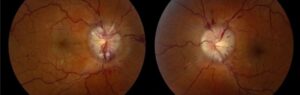
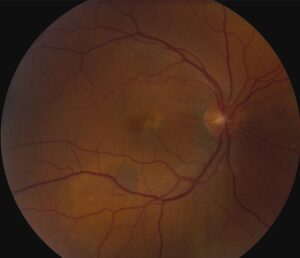
It can affect the eye and the optic nerve.
Therefore, an unexplained retinal occlusion in a young patient should raise this diagnosis.
What Antiphospholipid Syndrome Is
Patients have antibodies against proteins that bind phospholipids.
These antibodies promote clotting and pregnancy complications.
Also, the disease can occur alone or with lupus.
As a result, it is a common cause of acquired thrombophilia.
Diagnostic Criteria
The Sydney criteria require clinical events and positive laboratory tests on two occasions at least 12 weeks apart.
Miyakis and colleagues set these rules in 2006.
Also, the 2023 ACR and EULAR criteria added a weighted system.
Therefore, repeated testing is needed to confirm the disease.
Fundus Explorer Pro
Photograph the retinal findings described here with the phone already in your pocket — 22 D optics and built-in illumination in one handheld unit.
From Choroida — the team behind this siteLaboratory Tests for Antiphospholipid Syndrome
Test for lupus anticoagulant, anticardiolipin antibodies and anti-beta-2 glycoprotein I antibodies.
Triple-positive patients carry the highest risk.
Also, acute thrombosis and anticoagulants can affect the results.
As a result, interpret tests with a hematologist.
Antiphospholipid Syndrome and the Eye
Utz and Tang reviewed ocular findings in the syndrome.
Retinal vascular occlusion is the most common serious finding.
Also, amaurosis fugax and optic neuropathy occur.
Therefore, eye symptoms can be the first sign.
Retinal Vein Occlusion
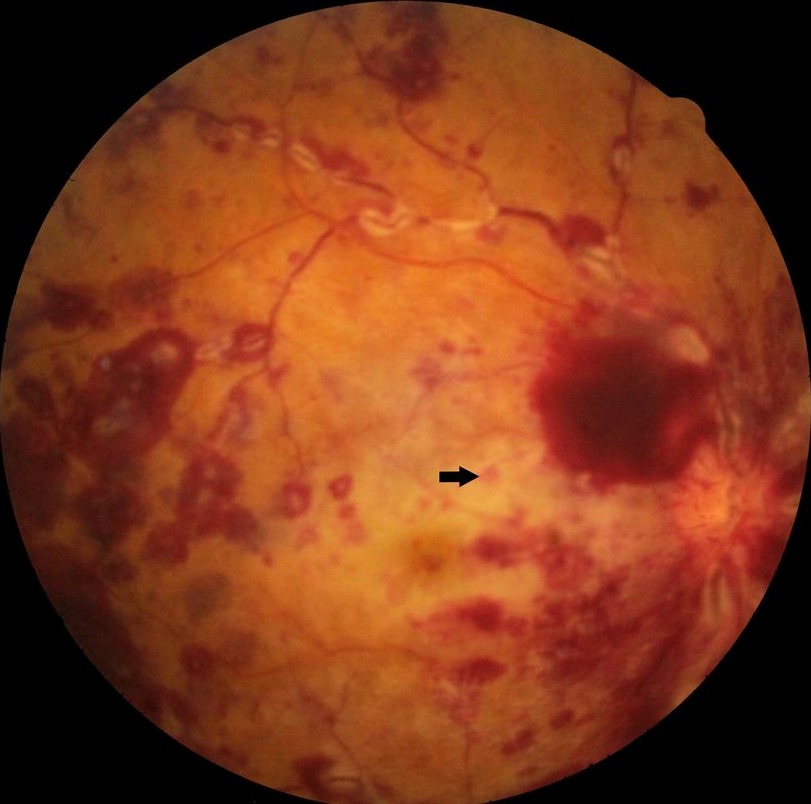
Both branch and central vein occlusion can occur in young patients.
Bilateral or recurrent disease raises suspicion.
Also, antiphospholipid antibodies are more frequent in young patients with vein occlusion.
In addition, review hypertension and other risk factors (see central retinal vein occlusion).
Retinal Artery Occlusion
Central and branch arterial occlusion may result from thrombosis or emboli.
Cilioretinal artery occlusion also occurs.
Also, a young patient with arterial occlusion needs a thrombophilia work-up (see retinal artery occlusion work-up).
Therefore, test for antibodies in selected cases.
Choroidopathy and Optic Neuropathy
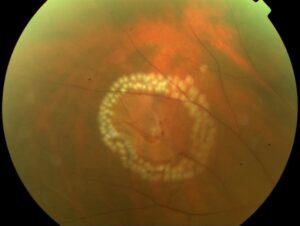
Small vessel occlusion in the choroid causes patchy infarcts.
Ischemic optic neuropathy can occur and may be bilateral.
Also, vasculopathy of the retina resembles lupus retinopathy.
As a result, the eye findings overlap with other vasculitic diseases.
Neovascular Complications
Ischemia may lead to neovascularization of the retina, disc or iris.
Neovascular glaucoma can follow.
Also, vitreous hemorrhage is possible.
Therefore, follow patients with angiography and treat ischemia.
Systemic Features of Antiphospholipid Syndrome
Patients may have stroke, migraine, livedo reticularis and thrombocytopenia.
Pregnancy loss is a common feature in women.
Also, Cervera and colleagues described these patterns in a large cohort.
In addition, valve disease can cause emboli.
Differential Diagnosis
Inherited thrombophilia, hyperviscosity and vasculitis produce similar occlusions.
Giant cell arteritis causes ischemic optic neuropathy in older patients.
Also, cardiac sources of emboli should be excluded.
As a result, the work-up must be broad.
Treating Antiphospholipid Syndrome
Long-term anticoagulation with warfarin is the usual treatment after thrombosis.
Direct oral anticoagulants are not advised in high-risk patients.
Also, Pengo and colleagues found more events with rivaroxaban than with warfarin in triple-positive patients.
Therefore, rely on specialist advice for drug choice.
Treatment of Ocular Complications
Anti-VEGF drugs treat macular edema and neovascularization.
Laser treats peripheral ischemia.
Also, steroids may help inflammatory components.
In addition, control blood pressure and lipids.
Prognosis in Antiphospholipid Syndrome
Vision depends on the area of retina lost and the speed of treatment.
Recurrent events are possible, especially after stopping anticoagulation.
Also, early diagnosis reduces risk.
As a result, long-term care is key.
Follow-Up
Examine the eyes at regular intervals.
Use OCT and angiography to detect new ischemia.
Also, communicate with the rheumatologist and hematologist.
Therefore, shared care improves safety.
Pregnancy and Antiphospholipid Syndrome
Women with the syndrome need special planning for pregnancy.
Low-dose aspirin and heparin are common.
Also, eye disease should be stable before pregnancy.
In addition, refer early for obstetric and eye review.
Pitfalls to Avoid
- Do not skip antibody tests in a young patient with unexplained occlusion
- Never rely on a single positive test
- Do not use a direct oral anticoagulant in high-risk patients without specialist advice
- Never ignore the other eye
Pathophysiology of Thrombosis
Antibodies activate endothelial cells, platelets and complement.
These steps raise clot formation in vessels of any size.
Also, the retina has many small vessels that clot easily.
Therefore, ocular events can be the first sign.
Differences from Lupus Retinopathy
Lupus retinopathy often shows cotton-wool spots and vasculitis.
The antiphospholipid form shows thrombotic occlusions.
Also, both may coexist.
As a result, test for antibodies in lupus patients with occlusion.


Document what you see
Two smartphone imaging tools built for everyday clinic use — one for the slit lamp, one for the fundus.
From Choroida — the team behind this siteReferences
- Miyakis S, Lockshin MD, Atsumi T, et al. International consensus statement on an update of the classification criteria for definite antiphospholipid syndrome. J Thromb Haemost. 2006;4:295-306.
- Utz VM, Tang J. Ocular manifestations of the antiphospholipid syndrome. Br J Ophthalmol. 2011;95:454-459.
- Cervera R, Piette JC, Font J, et al. Antiphospholipid syndrome: clinical and immunologic manifestations and patterns of disease expression in a cohort of 1,000 patients. Arthritis Rheum. 2002;46:1019-1027.
- Pengo V, Denas G, Zoppellaro G, et al. Rivaroxaban vs warfarin in high-risk patients with antiphospholipid syndrome. Blood. 2018;132:1365-1371.

Writes and reviews the clinical articles on Educate. Every post is checked against peer-reviewed sources before it goes live.