
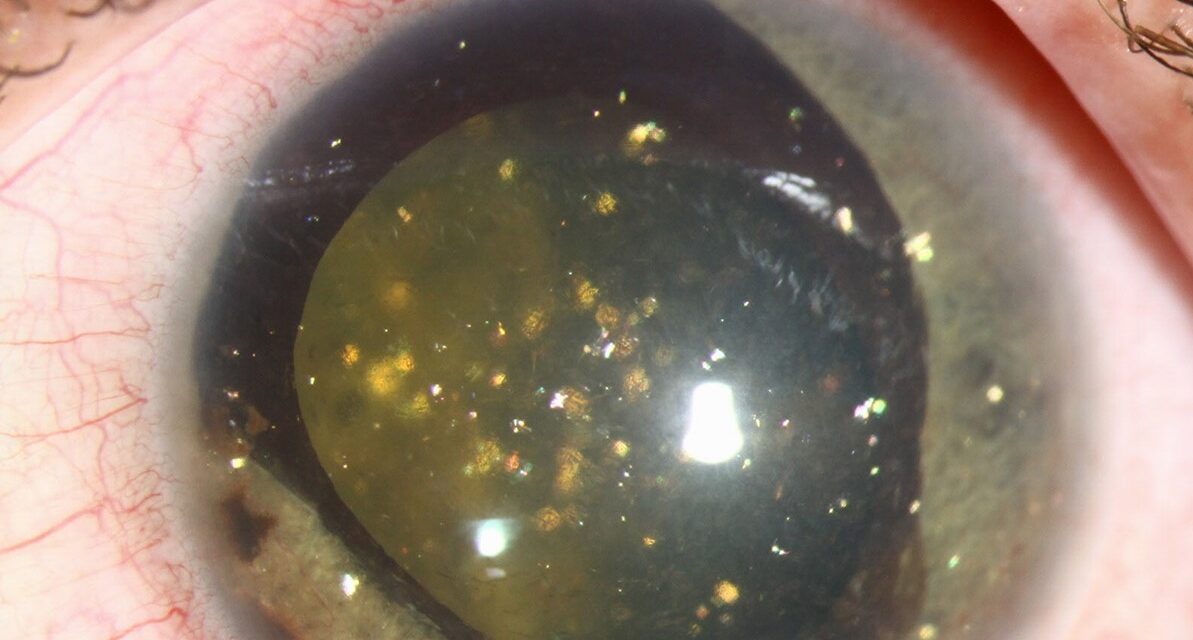
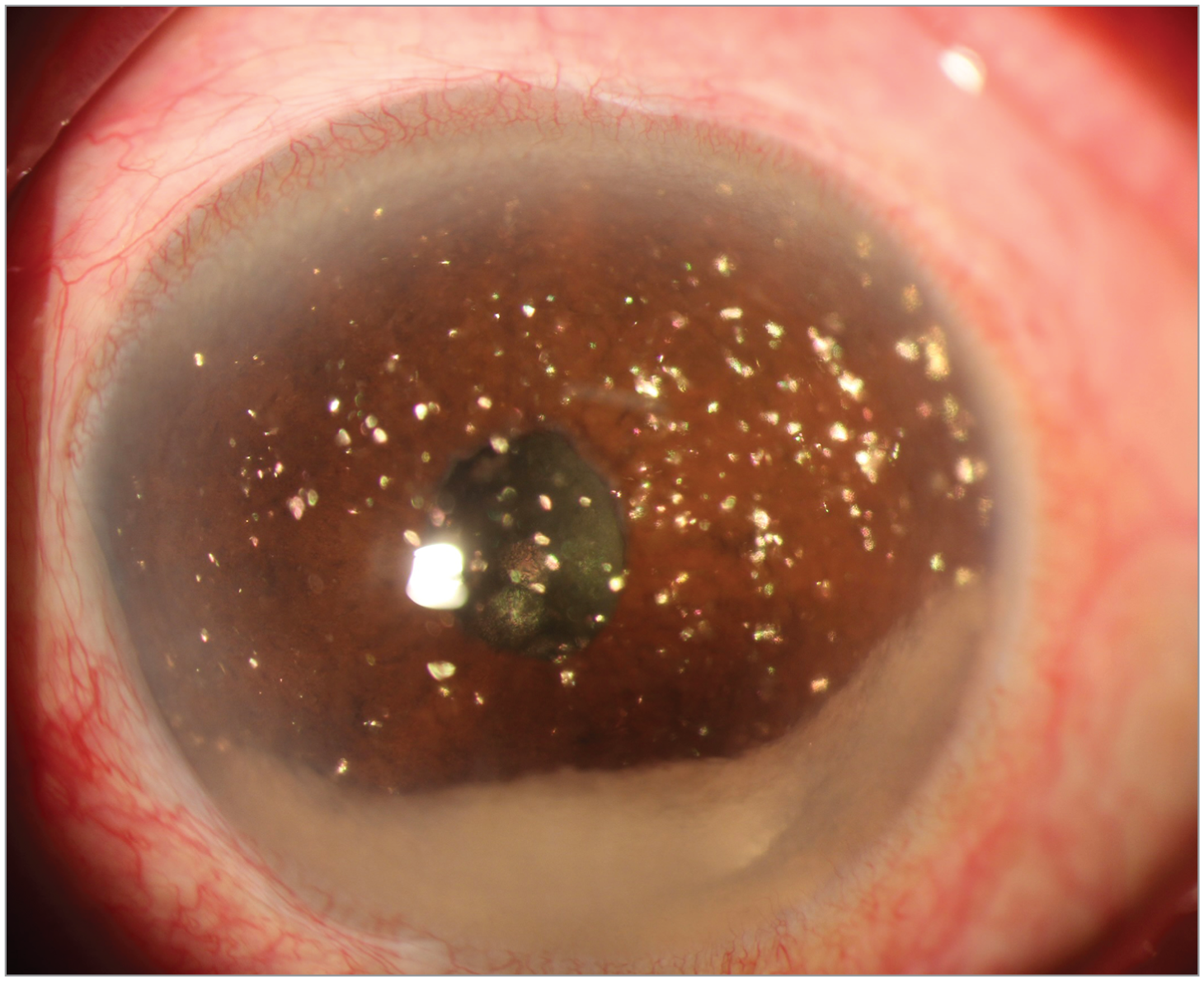
Synchysis scintillans and asteroid hyalosis both produce a striking, glittering appearance within the vitreous on slit-lamp or fundus examination, but a single, simple observation, whether the sparkling particles move freely with eye movement or stay fixed in place, immediately separates two conditions with entirely different underlying mechanisms, associated findings, and clinical implications.
The Key Distinguishing Observation
The single most useful clinical clue distinguishing these two conditions is particle mobility: in synchysis scintillans, the glittering particles are entirely free-floating within a liquefied vitreous cavity and settle to the bottom under gravity when the eye is still, then briefly swirl dramatically throughout the vitreous cavity with any eye movement before settling again, while in asteroid hyalosis, the particles remain embedded within the vitreous gel structure itself and, though they may sway somewhat with eye movement, they do not freely disperse and settle the way synchysis scintillans particles do.
Synchysis Scintillans
- Composed of cholesterol crystals, typically developing as a late consequence of prior significant intraocular pathology, most classically longstanding vitreous hemorrhage or chronic intraocular inflammation, in an eye where the vitreous has undergone significant liquefaction
- Requires substantial vitreous liquefaction to occur, since the crystals need a liquid medium within which to move freely, which is why this condition is typically seen in eyes with a history of significant prior insult rather than developing spontaneously in an otherwise healthy, normally structured vitreous
- Typically unilateral, corresponding to the eye with the relevant prior pathology, and often associated with poor vision in that eye related to the underlying condition that produced the vitreous liquefaction and hemorrhage in the first place
- The dramatic, dependent settling and swirling pattern with eye movement is itself diagnostic once observed
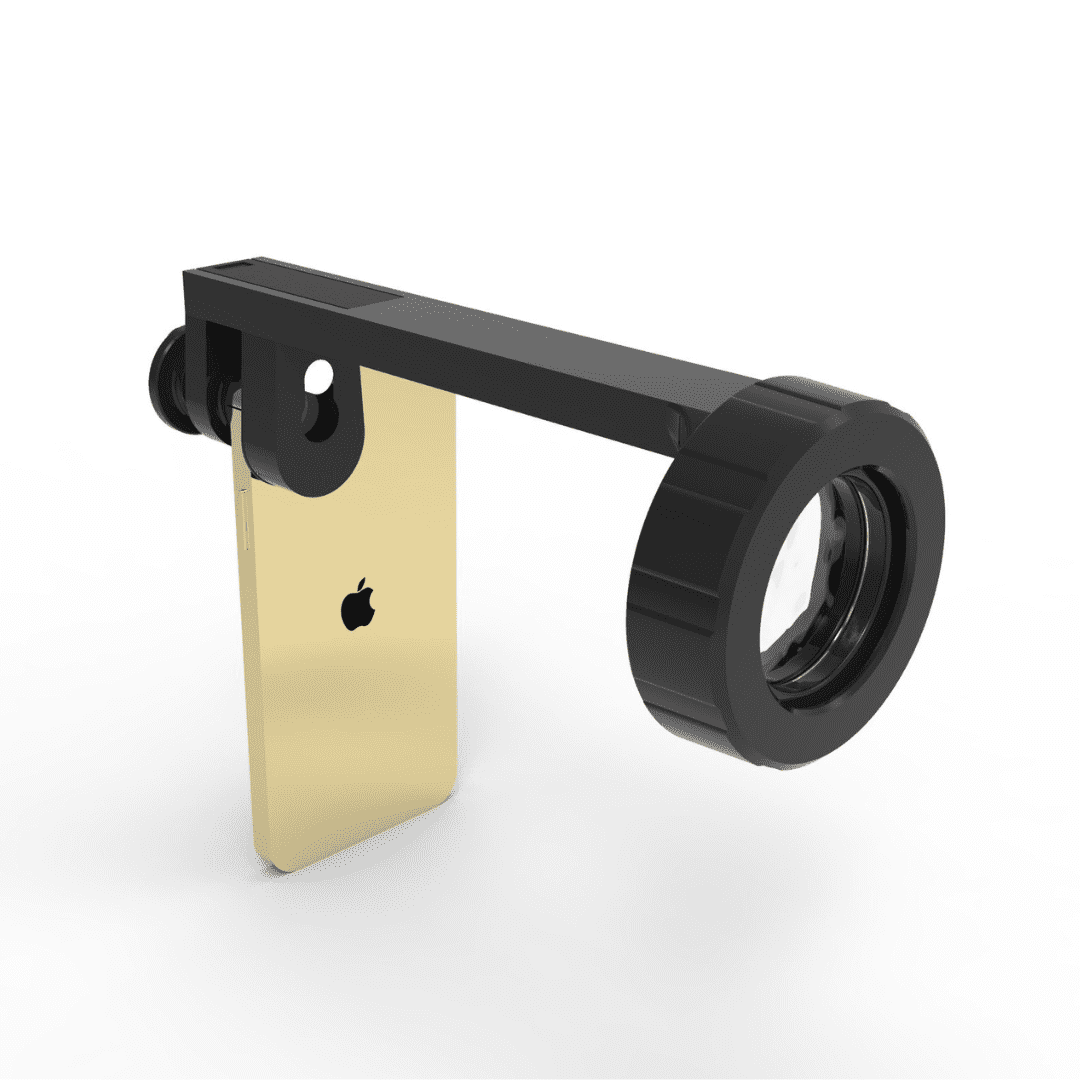
Fundus Explorer Pro
Photograph the retinal findings described here with the phone already in your pocket — 22 D optics and built-in illumination in one handheld unit.
From Choroida — the team behind this siteAsteroid Hyalosis
- Composed of calcium-lipid complexes suspended within an otherwise largely intact, non-liquefied vitreous gel structure
- Occurs as an age-related, generally idiopathic finding, typically in older patients, without necessarily any history of significant prior intraocular pathology
- Usually unilateral, though bilateral cases occur, and generally does not significantly affect vision even when extensive, since the particles are relatively sparse compared with the overall vitreous volume and their fixed position within the gel limits their interference with the visual axis compared with freely mobile opacities
- The particles’ restricted movement, swaying rather than freely dispersing and settling, is the key distinguishing feature from synchysis scintillans (see asteroid hyalosis)
Why the Distinction Matters Clinically
- Asteroid hyalosis is essentially always an incidental, benign finding requiring no further workup, while synchysis scintillans should prompt investigation into the underlying cause of the vitreous liquefaction and prior hemorrhage or inflammation that allowed it to develop
- Synchysis scintillans, given its association with significant prior pathology, is often accompanied by other signs of that underlying process and by meaningfully reduced vision in the affected eye, in contrast to the generally preserved vision typical of asteroid hyalosis
- Recognizing synchysis scintillans can prompt a more complete retinal evaluation once the view improves, since the underlying process that caused vitreous hemorrhage or inflammation severe enough to produce liquefaction may itself require ongoing management
Clinical Evaluation
- Careful observation of particle behavior with eye movement is the central diagnostic maneuver for distinguishing the two conditions
- A history of prior significant ocular trauma, hemorrhage, or inflammation supports synchysis scintillans, while its absence in an older patient with a more stable, sparkling vitreous pattern supports asteroid hyalosis
- Both conditions can significantly limit the view of the retina during fundus examination, sometimes necessitating B-scan ultrasound to assess the retina when the view is substantially obscured, particularly relevant for synchysis scintillans given the higher likelihood of underlying retinal pathology needing evaluation
Management
Asteroid hyalosis requires no treatment in the vast majority of cases, given its benign, generally visually insignificant nature.
Synchysis scintillans itself also generally requires no direct treatment, but management is directed at the underlying condition that caused the vitreous liquefaction and hemorrhage, and, in eyes where the opacities significantly obscure vision or prevent adequate retinal examination and monitoring, vitrectomy can be considered to clear the vitreous cavity.
Prognosis
Asteroid hyalosis carries an excellent visual prognosis and is essentially always simply an incidental finding.
The prognosis in synchysis scintillans depends primarily on the underlying condition that produced it rather than the crystalline opacities themselves, reinforcing that this finding is best understood as a marker of prior significant ocular pathology rather than a disease process in its own right.
Document what you see
Two smartphone imaging tools built for everyday clinic use — one for the slit lamp, one for the fundus.
From Choroida — the team behind this siteReferences
- Winkler J, Lunsdorf H. Ultrastructure and composition of asteroid bodies. Invest Ophthalmol Vis Sci. 2001;42:902-907.
- Bergren RL, Brown GC, Duker JS. Prevalence and association of asteroid hyalosis with systemic diseases. Am J Ophthalmol. 1991;111:289-293.
- Grignolo A, Schepens CL. Vitreous synchysis scintillans. Am J Ophthalmol. 1957;44:295-303.
- Moses RA, Hart WM. Adler’s Physiology of the Eye: Clinical Application. 8th ed. St. Louis: Mosby; 1987.
Test yourself
A few questions straight from this article.
-
Which single observation separates synchysis scintillans from asteroid hyalosis at the slit lamp?
In synchysis scintillans the crystals float freely, settle inferiorly when the eye is still and swirl with movement; asteroid bodies stay embedded in the gel and only sway. -
The glittering particles of synchysis scintillans are composed of which material?
Synchysis scintillans consists of cholesterol crystals, which develop as a late consequence of prior significant intraocular pathology. -
The refractile bodies of asteroid hyalosis are made up of which material?
Asteroid hyalosis is formed of calcium-lipid complexes suspended within an otherwise largely intact, non-liquefied vitreous gel. -
Which state of the vitreous is required for synchysis scintillans to develop?
The crystals need a liquid medium in which to move freely, so substantial vitreous liquefaction must be present for synchysis scintillans to occur. -
Synchysis scintillans most classically follows which prior ocular process?
Synchysis scintillans typically develops late after significant prior intraocular pathology, most classically longstanding vitreous haemorrhage or chronic intraocular inflammation. -
Which description best fits the usual clinical setting of asteroid hyalosis?
Asteroid hyalosis occurs as an age-related, generally idiopathic finding in older patients, without necessarily any history of significant prior intraocular pathology. -
A sparkling vitreous whose particles settle inferiorly at rest is seen. What does this finding warrant?
Dependent, freely mobile crystals indicate synchysis scintillans, which should prompt investigation into the prior haemorrhage or inflammation that produced the vitreous liquefaction. -
Which investigation helps assess the retina when sparkling vitreous opacities substantially obscure the fundus view?
Both conditions can limit the fundus view, and B-scan ultrasound is used to assess the retina when the view is substantially obscured. -
In synchysis scintillans, when can vitrectomy be considered?
Synchysis scintillans itself usually needs no direct treatment, but vitrectomy can be considered when the opacities significantly obscure vision or prevent adequate retinal examination and monitoring. -
What primarily determines the visual prognosis in an eye with synchysis scintillans?
Prognosis depends primarily on the underlying condition rather than the crystalline opacities, so the finding is best read as a marker of prior significant ocular pathology.
