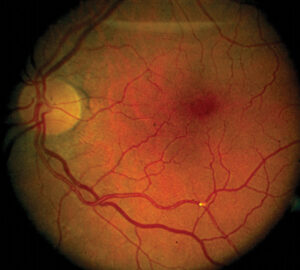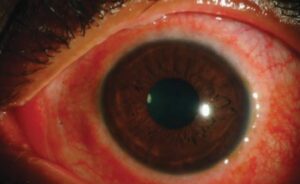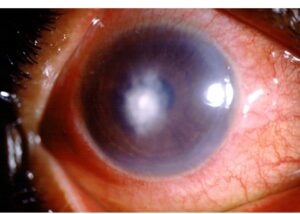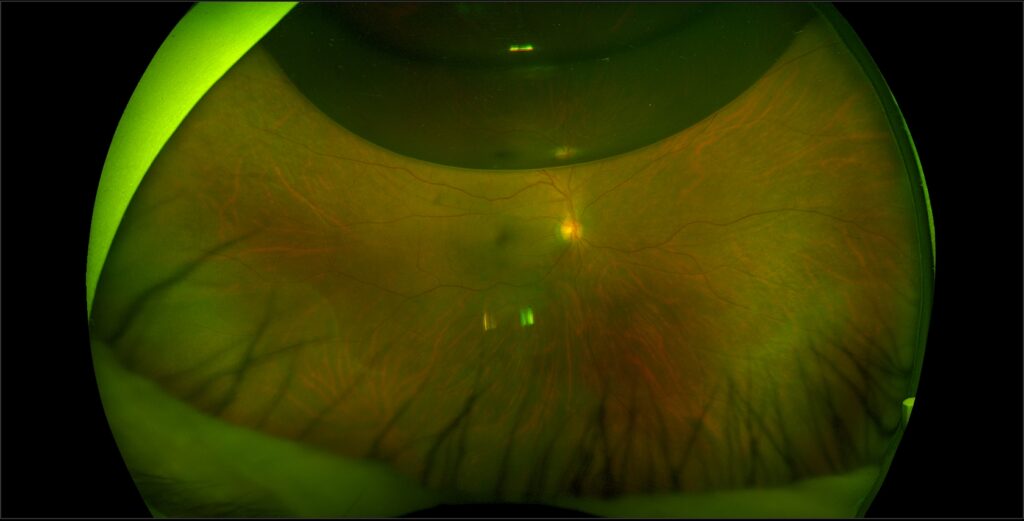
Intraocular gas and air travel do not mix, and the reason is physics.
Gas expands when the surrounding pressure falls.
The cabin of an aircraft, or a mountain road, lowers the pressure around the eye, so the bubble grows and the pressure in the eye rises.
The result can be sudden pain and loss of vision, and doctors can prevent it.
Why Intraocular Gas and Air Travel Conflict
Surgeons fill the eye with a gas bubble after vitrectomy for retinal detachment, macular hole, and some other conditions (see vitreous substitutes and gas tamponade).
The bubble floats against the retina and holds a break closed while the laser or cryotherapy scar forms.
The gases used are expansile, long-acting gases that stay in the eye for days to weeks.
Over time, the eye absorbs them slowly as the surrounding fluid replaces them.
Intraocular Gas and Air Travel: Types of Gas and Their Duration
- Air: absorbed in a few days, and not expansile
- Sulfur hexafluoride (SF6): expands to about twice its volume, lasts about two weeks, and in some patients up to three
- Perfluoroethane (C2F6): expands to about three times its volume, lasts about four weeks
- Perfluoropropane (C3F8): expands to about four times its volume, lasts six to eight weeks, and in some patients longer
Also, the exact duration depends on the concentration, the volume.
The eye, so the surgeon is the best source of advice (see the references).
Clinicians usually inject gas at a nonexpansile concentration, mixed with air, so that it does not expand in the eye at sea level, but it still expands at altitude.
Fundus Explorer Pro
Photograph the retinal findings described here with the phone already in your pocket — 22 D optics and built-in illumination in one handheld unit.
From Choroida — the team behind this siteIntraocular Gas and Air Travel: What Happens at Altitude
Airlines pressurize cabins to the equivalent of about 6,000 to 8,000 feet, which is about three quarters of the pressure at sea level.
Boyle’s law states that gas volume rises as pressure falls, so an intraocular bubble expands by a significant amount in a cabin, and more at higher elevations.
In a closed eye, the extra volume raises the intraocular pressure quickly.
A simulated air flight study showed marked pressure rises in gas-filled eyes (see the references).
Consequences
- Severe pain, redness, and nausea
- Rise in intraocular pressure, which can cause optic nerve damage
- Central retinal artery occlusion and sudden loss of vision, which doctors have reported after air travel with intraocular gas (see the references)
- Damage to the retina and the macula from raised pressure
- Need for emergency treatment, such as removal of gas
Even a short trip over a mountain pass can be dangerous.
Intraocular Gas and Air Travel: Rules for Patients
- No air travel until the gas has gone, or the surgeon has confirmed it is gone, even for short flights
- Avoid high altitude: mountain passes above about 2,000 to 3,000 feet in some advice, and high mountain areas, until the gas has gone
- No nitrous oxide anesthesia, as it diffuses into the bubble and expands it, even if the bubble is small
- Wear a wristband or carry a card that states that gas is present in the eye, with the type and the date
- Do not dive or use hyperbaric chambers without advice
- Avoid sleeping flat on the back, and follow positioning advice
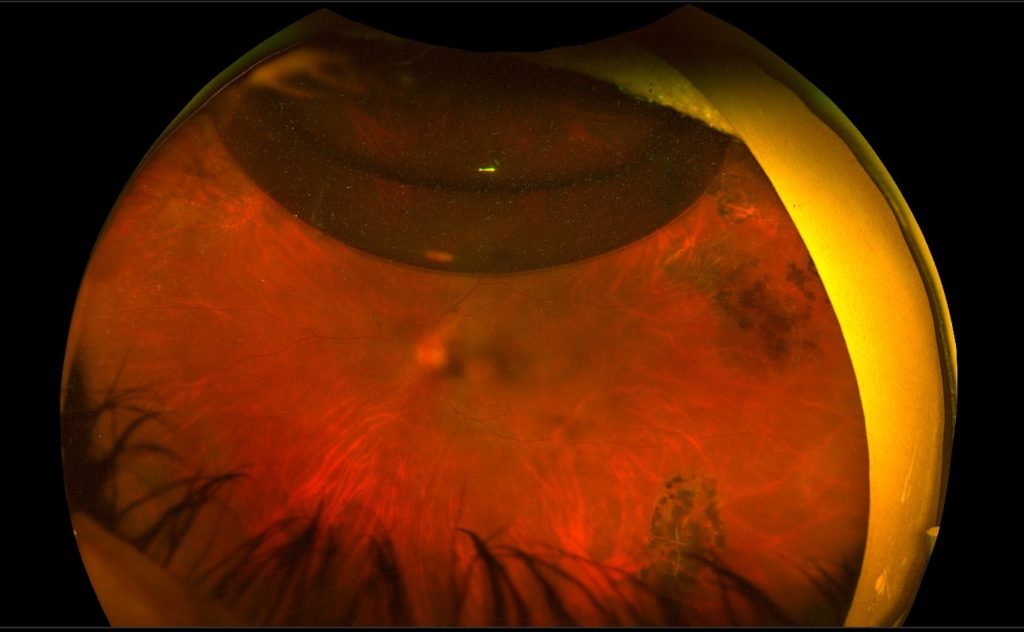
A bubble that appears as a line at the bottom of the vision, with a wobbling horizontal level, is still present.
When the Bubble Has Gone
The surgeon examines the eye and confirms that the bubble has resolved, usually when it takes less than a certain fraction of the eye, or is gone.
Patients can often tell when the bubble has gone, as the horizontal line disappears and vision clears.
Some surgeons allow travel when the bubble is small, but this requires a specific decision by the surgeon.
Warning Signs
- Increasing pain or pressure in the eye
- Rapid loss of vision or a dark curtain
- Severe headache and vomiting
- Corneal cloudiness and halos
These need immediate care, and the patient should tell medical staff about the gas.
Counselling
Tell patients before surgery, and repeat after it, that they must not fly or go to high altitude with gas in the eye.
Also, give written instructions and a wristband, and ask the family to help.
Explain that the risk is real, and that careful planning avoids it.
Planning Ahead
Surgeons should discuss travel plans before the operation, since the surgeon may offer a patient who needs to fly within weeks air or a shorter-acting gas, and not a long-acting one.
In addition, tell hospital and general practice staff that the patient has gas in the eye.
Record the information on the chart.


Document what you see
Two smartphone imaging tools built for everyday clinic use — one for the slit lamp, one for the fundus.
From Choroida — the team behind this siteReferences
- Fang IM, Huang JS. Central retinal artery occlusion caused by expansion of intraocular gas at high altitude. Am J Ophthalmol. 2002;134:603-605.
- Mills MD, Devenyi RG, Lam WC, et al. An assessment of intraocular pressure rise in patients with gas-filled eyes during simulated air flight. Ophthalmology. 2001;108:40-44.
- Lincoff H, Maisel JM, Lincoff A. Intravitreal disappearance rates of four perfluorocarbon gases. Arch Ophthalmol. 1984;102:928-929.
- American Academy of Ophthalmology. Basic and Clinical Science Course, Section 12: Retina and Vitreous. AAO; current edition.

Writes and reviews the clinical articles on Educate. Every post is checked against peer-reviewed sources before it goes live.